

AI-Enhanced Phishing: Navigating the Rising Cyber Threat
AI-driven phishing poses new challenges despite reduced attack volume
Executive Summary
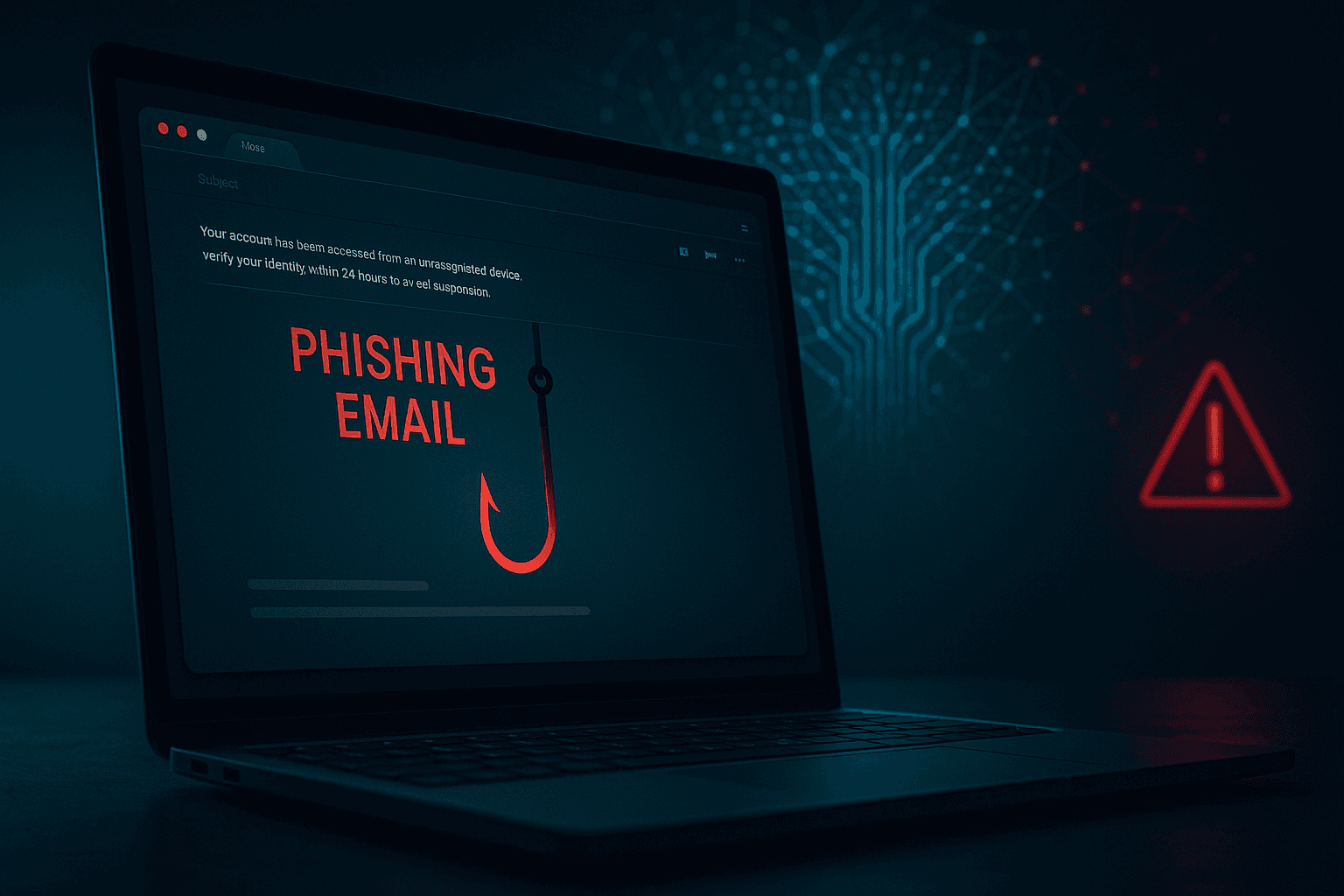
Phishing attacks have decreased by 20%, but the risk remains as cybercriminals use AI to enhance their tactics. This shift focuses on quality over quantity, leading to more sophisticated and targeted attacks. Organizations must prioritize enhancing detection systems and implementing robust security measures to safeguard against these evolving threats.
Introduction: Understanding the Threat
In today's digital landscape, cybersecurity threats are ever-evolving, with phishing remaining one of the most pervasive. While recent statistics indicate a 20% drop in phishing attack volume, the threat is far from diminishing. Cybercriminals are increasingly employing artificial intelligence to craft more sophisticated and convincing phishing schemes. This shift from quantity to quality signifies a new era of cybersecurity challenges that organizations must navigate.
Historically, phishing attacks have relied on casting a wide net, sending out mass emails in the hope of ensnaring unsuspecting victims. However, as defenses have strengthened, attackers have adapted. The use of AI allows for the creation of highly personalized and context-aware phishing emails, making them harder to detect and more likely to succeed. This evolution poses significant risks to organizations, demanding a recalibration of existing security strategies.
The Threat Landscape: Current State of Affairs
The cybersecurity landscape is witnessing a shift as attackers prioritize the quality of their phishing campaigns over sheer volume. According to recent industry reports, phishing volumes have decreased globally, yet the sophistication of attacks has risen. This trend aligns with the broader movement towards more targeted cyber threats, where attackers focus on high-value targets and employ advanced tactics to achieve their objectives.
Statistics reveal that despite the reduction in volume, the success rate of phishing campaigns has increased. This is attributed to the use of machine learning algorithms that enable attackers to simulate legitimate communications effectively. Furthermore, the integration of AI tools allows for real-time adaptation, adjusting tactics based on initial responses from targets.
Recent incidents highlight this trend, with several high-profile breaches originating from AI-enhanced phishing attacks. These incidents underline the critical need for organizations to stay ahead of the curve by enhancing their threat detection and response capabilities.
Technical Deep Dive: How the Attack Works
AI-enhanced phishing attacks leverage several advanced techniques to deceive targets. Attackers use machine learning to analyze vast amounts of data, crafting personalized emails that mimic legitimate communications. This involves using natural language processing to generate text that appears authentic and contextually relevant.
The attack typically begins with reconnaissance, where attackers gather information about the target organization and its employees. This data is then fed into AI models to produce phishing emails that are tailored to the recipient's role and responsibilities. Common attack vectors include spear-phishing emails that appear to come from trusted sources, such as colleagues or business partners.
Once the email is delivered, it often contains malicious links or attachments. These are designed to exploit vulnerabilities in the recipient's system or to harvest credentials when the victim unwittingly provides them. Indicators of compromise (IOCs) for such attacks include unusual email headers, unexpected sender domains, and anomalous attachment types.
Technical defenses against these attacks require a multi-layered approach, incorporating both AI-driven detection systems and traditional security measures. Organizations must train their systems to recognize subtle anomalies in email content and behavior to effectively counter these sophisticated threats.
Impact Assessment: Who Is Affected and How
The impact of AI-enhanced phishing attacks is far-reaching, affecting various industries and sectors. High-value targets such as financial institutions, healthcare organizations, and governmental bodies are particularly vulnerable due to the sensitive nature of their data and operations.
Financially, the consequences can be severe, with successful phishing attacks leading to substantial monetary losses. Operationally, such breaches can disrupt business activities, erode customer trust, and damage reputations. Furthermore, data breaches resulting from phishing attacks can trigger significant regulatory and compliance challenges, especially under frameworks like GDPR.
Organizations across industries must recognize the potential ramifications of these attacks and implement proactive measures to protect their assets and stakeholders.
Real-World Case Studies
One notable case involves a multinational corporation that fell victim to an AI-enhanced phishing attack, resulting in a multi-million dollar financial loss. The attackers used AI to craft emails impersonating senior executives, convincing employees to transfer funds to fraudulent accounts.
Another example is a healthcare provider that experienced a data breach following a phishing email that bypassed traditional security filters. The attackers obtained access to patient records, highlighting the critical need for advanced security protocols in the sector.
These incidents underscore the importance of learning from past attacks and continuously improving security measures to mitigate similar risks in the future.
Mitigation Strategies: Protecting Your Organization
To combat the rising threat of AI-enhanced phishing, organizations must adopt a comprehensive approach to security. Immediate actions include enhancing email filtering systems and implementing multi-factor authentication to add an extra layer of defense.
Short-term measures involve employee training programs focused on recognizing phishing attempts and responding appropriately. Regular phishing simulations can also help in building a security-aware culture within the organization.
Long-term strategies should emphasize the integration of AI-driven threat detection systems that can identify and neutralize phishing attempts in real-time. Investing in security information and event management (SIEM) solutions can aid in monitoring and responding to potential threats effectively.
Organizations should also consider configuration recommendations, such as disabling macros in emails and restricting the execution of potentially harmful scripts, to further reduce the risk of compromise.
Detection and Response
Detecting AI-enhanced phishing attacks requires a combination of human and technological vigilance. Indicators of compromise include suspicious email patterns, unexpected requests for sensitive information, and anomalies in user behavior.
Incident response procedures should be well-defined and regularly updated to address new threats. Organizations must establish a dedicated response team capable of conducting forensic investigations to understand the scope and impact of an attack.
Forensic considerations include analyzing email headers and metadata to trace the source of the attack and identifying compromised systems for containment and recovery.
Expert Insights: Industry Perspective
Industry experts predict that the use of AI in cyber threats will continue to grow, making it imperative for organizations to stay informed and prepared. The evolving threat landscape demands continuous adaptation and investment in advanced security technologies.
Security teams should focus on building resilience through a layered security approach that combines traditional measures with cutting-edge AI-driven tools. This includes fostering collaboration with industry peers to share insights and best practices.
As the threat landscape evolves, security professionals must anticipate future challenges and prepare for increasingly sophisticated attacks that leverage emerging technologies.
Conclusion: Key Takeaways
The rise of AI-enhanced phishing attacks underscores the need for organizations to reassess their cybersecurity strategies. Key actionable takeaways include:
- Enhance email filtering and adopt multi-factor authentication.
- Invest in AI-driven threat detection systems.
- Conduct regular employee training and phishing simulations.
- Implement robust incident response and forensic procedures.
- Collaborate with industry peers for threat intelligence sharing.
By taking these steps, organizations can better protect themselves against evolving phishing threats and safeguard their digital assets.
Discussion
Share Your Thoughts
Loading comments...
Stay Updated
Subscribe to our newsletter for the latest cybersecurity insights, threat intelligence, and security best practices.