

Beware of Fake Open-Source Sites: Malware Threats Lurking in Plain Sight
How cybercriminals exploit trusted tools to spread malware
Executive Summary
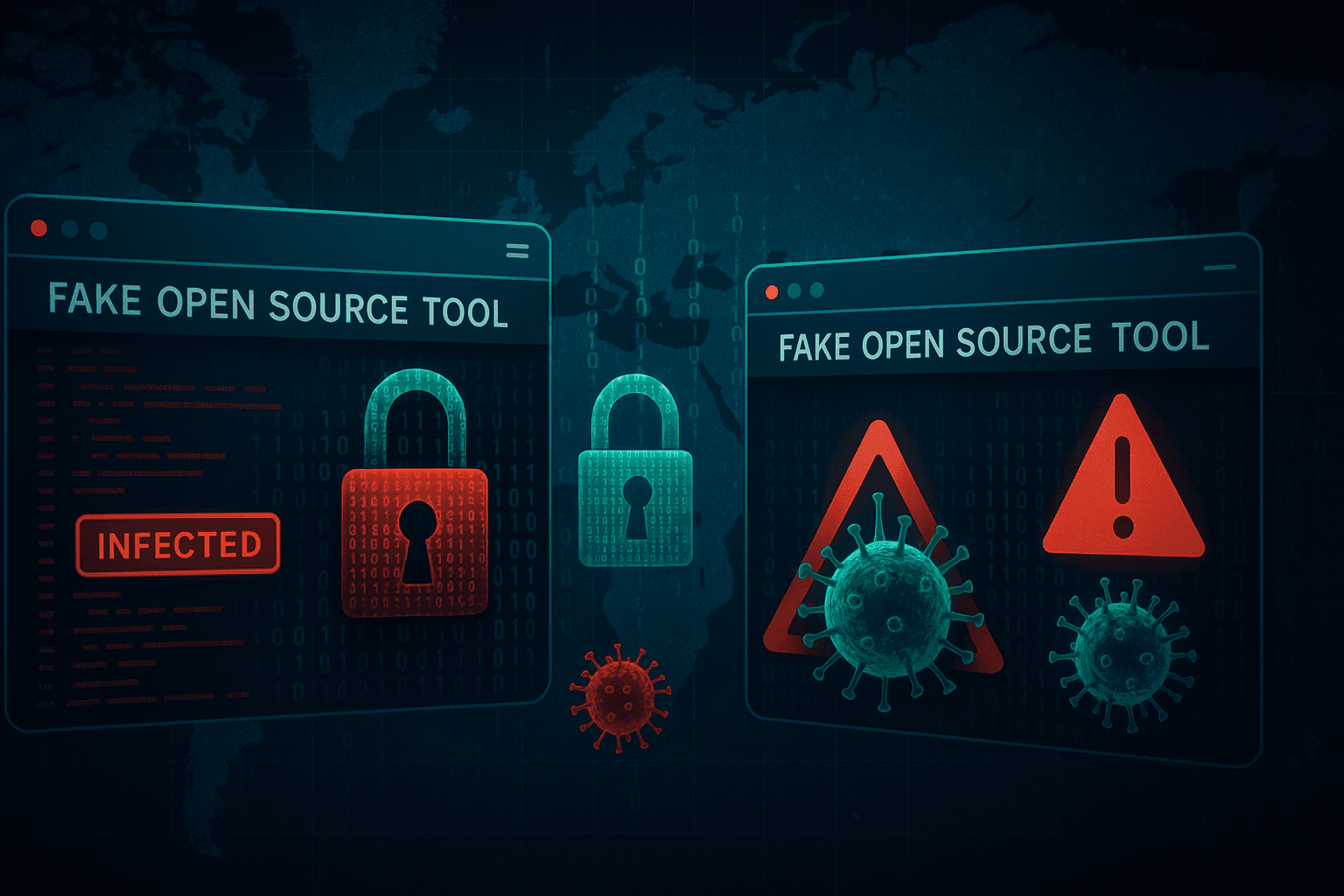
Cybersecurity experts have uncovered a sophisticated operation using fake sites mimicking open-source tools to distribute malware through Traffic Distribution Systems (TDS). This poses a significant threat to organizations, risking data breaches and financial losses. Immediate action is recommended to enhance security measures.
Introduction: Understanding the Threat
The digital landscape is rife with threats, and cybercriminals are becoming increasingly sophisticated in their methods. One such method involves the creation of fake websites that mimic legitimate open-source and freeware project portals. These sites are designed to deceive users into downloading malware, often without their knowledge. This strategy is particularly dangerous as it exploits the trust users place in well-known open-source tools.
Organizations today rely heavily on open-source software for their operations. This reliance makes them prime targets for cybercriminals looking to exploit vulnerabilities. The operation discovered by cybersecurity researchers highlights the need for vigilance and proactive security measures to protect against such threats.
Historically, similar tactics have been used to spread malware, with attackers often leveraging popular software platforms to reach a wider audience. The current threat underscores the importance of understanding the evolving nature of cyber threats and implementing robust security protocols.
The Threat Landscape: Current State of Affairs
The cybersecurity landscape is constantly evolving, with new threats emerging regularly. According to industry statistics, cybercrime is expected to cause global damages amounting to $10.5 trillion annually by 2025. This figure highlights the growing scale and impact of cyber threats on businesses and individuals alike.
The tactic of using fake websites to distribute malware is not new, but it has become more sophisticated. Cybercriminals are now employing advanced techniques such as Traffic Distribution Systems (TDS) to funnel unsuspecting users to malicious sites. This method allows them to target specific users based on their online behavior and deliver customized malware payloads.
Recent incidents have shown a similar pattern, where attackers create convincing replicas of legitimate sites to deceive users. For example, in 2021, a widespread campaign involved fake Microsoft Teams update sites, which were used to deliver malware to corporate networks. Such incidents serve as a stark reminder of the need for heightened cybersecurity awareness and measures.
As the threat landscape continues to evolve, organizations must stay informed about the latest trends and threats. This knowledge is crucial for developing effective defense strategies and mitigating potential risks.
Technical Deep Dive: How the Attack Works
The attack begins with the creation of fake websites that mimic legitimate open-source and freeware project portals. These sites are carefully designed to look authentic, often featuring similar design elements and branding as the original sites. Once a user visits one of these fake sites, they are redirected through a Traffic Distribution System (TDS), which determines the most effective way to deliver the malware.
The TDS uses various criteria, such as the user's location, browser type, and operating system, to tailor the delivery of malware. This targeted approach increases the likelihood of a successful infection. Once the malware is delivered, it can execute various malicious activities, such as data theft, system compromise, or even ransomware attacks.
Technical indicators of compromise (IOCs) for these attacks include unusual redirects, suspicious domain names, and unexpected downloads. Security teams should be vigilant for signs of these activities and implement measures to detect and block them.
For example, one of the malware families distributed through these fake sites is Remus Stealer, which is designed to harvest sensitive information from infected systems. Another is AnimateClipper, which targets cryptocurrency transactions by altering wallet addresses. The SessionGate framework is also used to maintain persistent access to compromised systems.
Understanding the technical details of these attacks is crucial for developing effective detection and response strategies. Organizations should prioritize monitoring their networks for signs of compromise and implement robust security measures to prevent such attacks.
Impact Assessment: Who Is Affected and How
The impact of these attacks is far-reaching, affecting a wide range of industries and sectors. Organizations that rely heavily on open-source software are particularly vulnerable, as they are more likely to encounter fake sites mimicking popular tools.
The financial and operational consequences of such attacks can be severe. In addition to the direct costs associated with data breaches and system downtime, organizations may face reputational damage and loss of customer trust. The theft of sensitive information can also lead to regulatory fines and legal liabilities, particularly in regions with strict data protection laws such as the EU's General Data Protection Regulation (GDPR).
Data breach implications are significant, as cybercriminals can exploit stolen information for various malicious purposes. This includes identity theft, financial fraud, and targeted attacks against individuals and organizations.
Regulatory and compliance considerations are also critical. Organizations must ensure they comply with relevant data protection regulations and implement measures to safeguard their data. Failure to do so can result in significant penalties and legal ramifications.
Real-World Case Studies
One notable case involved a fake site mimicking a popular open-source development tool. Users who downloaded the software from the site unknowingly installed malware that compromised their systems. The attack resulted in significant data breaches and financial losses for several organizations.
Another incident involved a fake site pretending to be a freeware project portal. The site was used to distribute ransomware, which encrypted the systems of several businesses. The affected organizations faced substantial operational disruptions and were forced to pay significant ransoms to regain access to their data.
These case studies highlight the importance of vigilance and proactive security measures. Organizations must learn from these incidents and implement strategies to protect against similar threats in the future.
Mitigation Strategies: Protecting Your Organization
To protect against these threats, organizations should take immediate action to enhance their security measures. This includes implementing robust web filtering solutions to block access to malicious sites and using advanced threat detection systems to identify and respond to suspicious activities.
Short-term security measures include educating employees about the risks of fake sites and encouraging them to verify the authenticity of websites before downloading software. This can be achieved through regular security awareness training and the use of secure browsing practices.
Long-term strategic improvements involve adopting a multi-layered security approach that includes endpoint protection, network security, and data encryption. Organizations should also conduct regular security assessments and penetration testing to identify and address vulnerabilities.
Specific tools and technologies to consider include secure web gateways, intrusion detection systems, and endpoint detection and response (EDR) solutions. These tools can help detect and block malicious activities, reducing the risk of compromise.
Configuration recommendations include ensuring that security solutions are properly configured to monitor and block suspicious activities. This includes setting up alerts for unusual network traffic and implementing strict access controls to prevent unauthorized access to sensitive systems.
Detection and Response
Detection of these threats requires a multi-faceted approach that includes monitoring network traffic for signs of compromise. Security teams should look for unusual redirects, suspicious domain names, and unexpected downloads, which can indicate the presence of fake sites.
Incident response procedures should be in place to quickly address any detected threats. This includes isolating affected systems, conducting forensic investigations to determine the extent of the compromise, and implementing measures to prevent further incidents.
Forensic considerations are also important, as they can provide valuable insights into the nature of the attack and help identify the attackers. Organizations should ensure they have the necessary tools and expertise to conduct thorough forensic investigations.
Expert Insights: Industry Perspective
Experts predict that the threat landscape will continue to evolve, with cybercriminals adopting more sophisticated tactics to bypass security measures. This includes the use of artificial intelligence and machine learning to enhance their attacks and target specific victims.
The future of cybersecurity will likely involve a greater focus on proactive threat hunting and the use of advanced analytics to detect and respond to emerging threats. Organizations must stay informed about the latest trends and technologies to effectively protect their systems and data.
Security teams should prepare for the evolving threat landscape by investing in advanced security solutions and continuously updating their defense strategies. Collaboration and information sharing within the cybersecurity community are also crucial for staying ahead of emerging threats.
Conclusion: Key Takeaways
The rise of fake sites mimicking open-source tools poses a significant threat to organizations worldwide. By understanding the nature of these threats and implementing effective security measures, organizations can protect themselves and mitigate the risks of compromise.
- Stay informed about the latest cybersecurity threats and trends.
- Implement robust security measures to block access to malicious sites.
- Conduct regular security assessments and penetration testing.
- Educate employees about the risks of fake sites and secure browsing practices.
- Invest in advanced threat detection systems and tools.
- Establish incident response procedures to quickly address detected threats.
- Collaborate and share information within the cybersecurity community.
Discussion
Share Your Thoughts
Loading comments...
Stay Updated
Subscribe to our newsletter for the latest cybersecurity insights, threat intelligence, and security best practices.