
Critical Zimbra Flaw: How Malicious Emails Can Compromise User Sessions
Protect Your Organization from the Latest Zimbra Vulnerability
Executive Summary
A newly identified vulnerability in Zimbra's Classic Web Client presents a significant risk for organizations relying on this email platform. This flaw, a stored cross-site scripting (XSS) vulnerability, allows attackers to execute arbitrary code through specially crafted emails. Immediate patching and vigilance in email security protocols are recommended to prevent potential exploitation.
Introduction: Understanding the Threat
The digital landscape is fraught with threats that evolve rapidly, posing serious risks to organizational data security. Among these, the recent discovery of a critical vulnerability in Zimbra's Classic Web Client has raised alarm. This vulnerability, characterized by its potential to allow arbitrary code execution via crafted emails, highlights the ongoing challenges in maintaining secure communication channels. For enterprises that rely on Zimbra for email services, understanding and addressing this threat is crucial.
Historically, email platforms have been prime targets for cybercriminals, given their integral role in business operations. Previous incidents of email-based attacks, such as the infamous phishing campaigns and ransomware delivered through email attachments, underscore the importance of robust email security measures. This context places the current Zimbra vulnerability in a broader narrative of persistent threats that organizations must navigate.
The Threat Landscape: Current State of Affairs
The cybersecurity landscape is continually shifting, with new vulnerabilities emerging as technology advances. According to recent industry reports, email-based threats remain among the top vectors for cyberattacks, accounting for a significant percentage of security breaches. The introduction of vulnerabilities like the one found in Zimbra only exacerbates these challenges, making it imperative for organizations to stay informed and proactive.
In recent years, stored cross-site scripting (XSS) has been a widespread concern, affecting various web applications. This type of vulnerability enables attackers to inject malicious scripts into web pages viewed by other users, leading to compromised sessions and unauthorized access to sensitive information. The Zimbra flaw fits into this pattern, underscoring the need for heightened awareness and rapid response strategies.
Recent incidents have shown that similar vulnerabilities can lead to severe breaches, affecting thousands of users and causing substantial financial losses. As attackers continue to refine their techniques, the potential impact of exploiting such vulnerabilities grows, making it essential for security teams to prioritize patch management and user education.
Technical Deep Dive: How the Attack Works
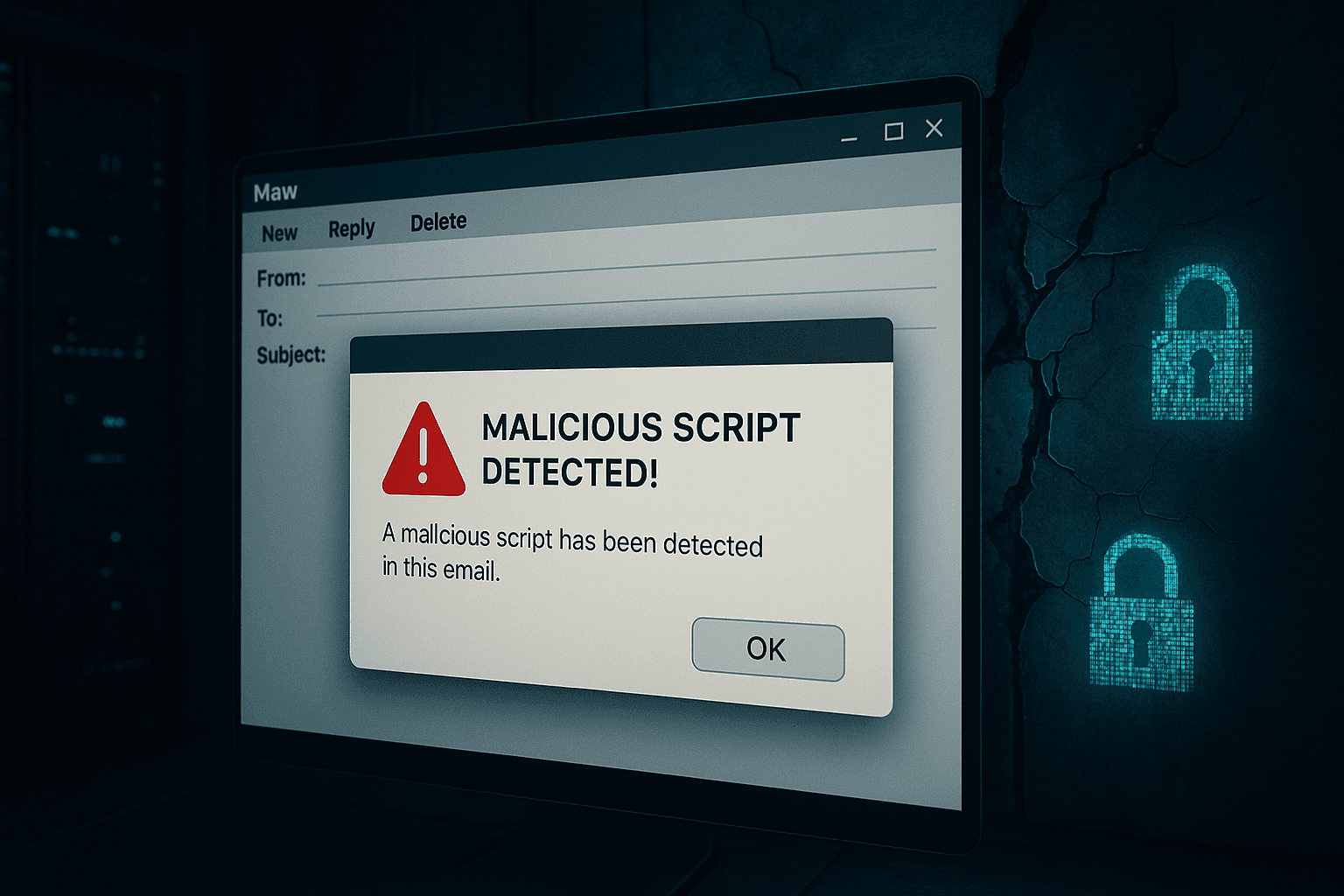
The Zimbra vulnerability in question is a stored cross-site scripting (XSS) flaw. This type of vulnerability occurs when an application stores user input insecurely, allowing malicious scripts to be executed in the context of another user's session. In the case of Zimbra, attackers can send specially crafted emails that, when viewed, trigger the execution of harmful scripts.
The attack vector is relatively straightforward: an attacker crafts an email containing malicious JavaScript code, which is then stored by the Zimbra server. When a user accesses their email and views the message, the script executes within their session, potentially allowing the attacker to steal cookies, session tokens, or other sensitive data.
Technical indicators of compromise (IOCs) for such attacks include unexpected script execution within email clients, anomalous user behavior such as unsanctioned data access, and alerts from intrusion detection systems (IDS) regarding unusual outbound traffic.
While no CVE identifier has been assigned yet, the vulnerability's characteristics align with known XSS attack patterns. Organizations should monitor updates from Zimbra and cybersecurity advisories for the latest patches and mitigation techniques.
Impact Assessment: Who Is Affected and How
The Zimbra vulnerability poses a significant risk to organizations across various sectors, particularly those heavily reliant on email communications for daily operations. Industries such as finance, healthcare, and government are especially vulnerable due to the sensitive nature of the data they handle.
The financial implications of an exploited vulnerability can be severe, including direct costs associated with data breach response, potential fines for non-compliance with data protection regulations, and indirect costs such as reputational damage and loss of customer trust.
Operationally, a successful attack could result in downtime as systems are secured and remediated, along with potential data loss or corruption. For sectors with stringent regulatory requirements, such as GDPR in Europe, the failure to address such vulnerabilities could lead to substantial penalties.
Real-World Case Studies
Examining past incidents provides valuable insights into the potential ramifications of exploiting vulnerabilities like the one in Zimbra. In 2019, a major email provider faced a similar XSS vulnerability that led to unauthorized access to user accounts, resulting in significant data exposure and a costly investigation.
Lessons from such cases emphasize the importance of timely patching, user education on recognizing suspicious emails, and implementing robust monitoring tools to detect and respond to anomalies swiftly.
Mitigation Strategies: Protecting Your Organization
To mitigate the risk posed by the Zimbra vulnerability, organizations should take immediate and strategic actions. Firstly, applying the latest patches and updates provided by Zimbra is crucial. Keeping software up-to-date ensures that known vulnerabilities are addressed before they can be exploited.
In the short term, organizations should implement additional security measures such as email filtering solutions that detect and block suspicious attachments or links. Educating users on recognizing phishing attempts and suspicious emails is equally important, as human error remains a significant factor in successful attacks.
Long-term strategies should focus on enhancing overall security posture. This includes adopting a multi-layered security approach, incorporating advanced threat detection technologies like Security Information and Event Management (SIEM) systems, and conducting regular security audits to identify and remediate vulnerabilities proactively.
Configuration recommendations include disabling unnecessary services in Zimbra, applying strict access controls, and regularly reviewing security settings to ensure they align with best practices.
Detection and Response
Detecting and responding to incidents stemming from the Zimbra vulnerability require a well-coordinated approach. Organizations should establish monitoring systems capable of identifying unusual behavior within email systems, such as unexpected script execution or unauthorized data access attempts.
Signs of compromise may include alerts from IDS regarding anomalous traffic patterns, users reporting unexpected email activity, or security tools flagging suspicious emails. Incident response procedures should be clearly defined, with roles and responsibilities assigned to ensure a swift and efficient response.
Forensic considerations are crucial during the response phase, as understanding the attack's scope and impact is necessary for effective remediation and prevention of future incidents.
Expert Insights: Industry Perspective
According to cybersecurity experts, the threat landscape is becoming increasingly complex, with attackers leveraging sophisticated techniques to exploit vulnerabilities. The Zimbra flaw highlights the need for continuous vigilance and adaptation to emerging threats.
Future predictions suggest that as email platforms evolve, so too will the tactics used by cybercriminals. Security teams should prepare for more advanced, targeted attacks that exploit both technical vulnerabilities and human weaknesses.
Industry leaders emphasize the importance of collaboration and information sharing among organizations to stay ahead of threats. By learning from each other and adopting best practices, security teams can better protect their organizations from evolving cyber risks.
Conclusion: Key Takeaways
The discovery of a critical vulnerability in Zimbra's Classic Web Client underscores the dynamic nature of cybersecurity threats. Organizations must remain vigilant, proactive, and informed to safeguard their systems and data.
- Apply Zimbra's latest patches immediately to mitigate the vulnerability.
- Enhance email security measures to detect and block malicious content.
- Educate employees on recognizing phishing attempts and suspicious emails.
- Adopt a multi-layered security approach to protect against evolving threats.
- Monitor for signs of compromise and establish clear incident response procedures.
- Collaborate with industry peers to share insights and strengthen defenses.
By taking these steps, organizations can better protect themselves against the risks posed by vulnerabilities like the one affecting Zimbra.
Discussion
Share Your Thoughts
Loading comments...
Stay Updated
Subscribe to our newsletter for the latest cybersecurity insights, threat intelligence, and security best practices.