

Cybersecurity Evolution: Two Decades of Progress and Challenges
Reflecting on 20 years of cybersecurity advancements and hurdles
Executive Summary
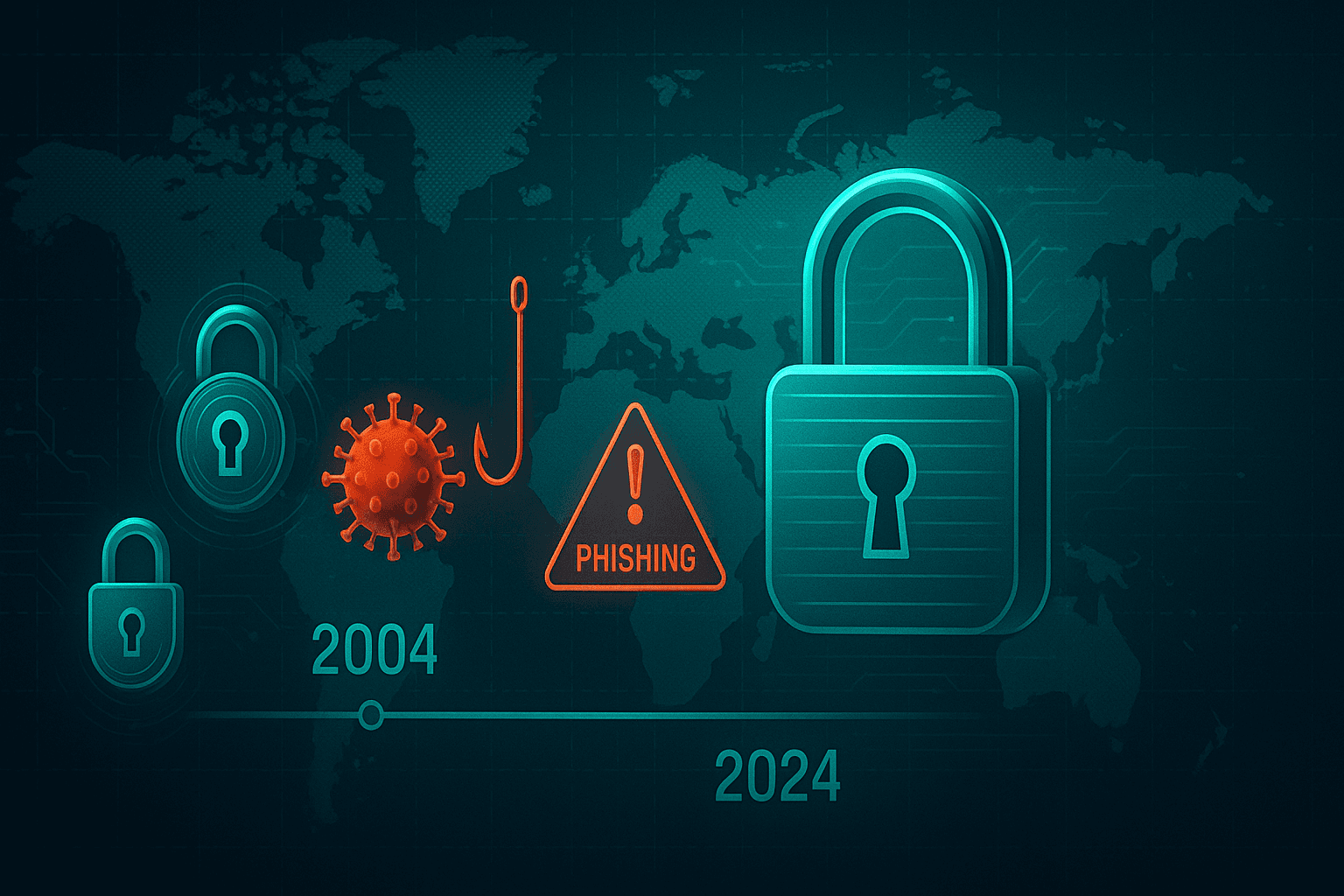
The cybersecurity landscape has dramatically evolved over the past 20 years, marked by increasing threats and innovations in defense. Organizations must stay vigilant, adapting to emerging threats with robust strategies. It's crucial to understand past patterns to prepare for future challenges.
Introduction: Understanding the Threat
In the past two decades, the cybersecurity industry has witnessed an exponential growth in both the sophistication and frequency of cyber threats. From the proliferation of malware to complex nation-state attacks, organizations today face a myriad of challenges in securing their digital assets. This evolution matters because the risks have direct implications on economic stability and national security.
Historically, cyber threats were often limited to nuisance-level viruses, but as technology has advanced, so too have the threats. The emergence of ransomware, advanced persistent threats (APTs), and massive data breaches has redefined the landscape. Organizations must now anticipate and mitigate these threats as part of their core operational strategy.
The Threat Landscape: Current State of Affairs
Today's threat landscape is characterized by its complexity and the sheer volume of attacks. According to recent statistics, ransomware attacks have increased by 150% over the last year alone, with average ransom demands exceeding $200,000. This trend is reflective of the broader shift towards financially motivated cybercrime.
Moreover, the COVID-19 pandemic accelerated digital transformation, inadvertently expanding the attack surface for cybercriminals. Remote work and cloud adoption have introduced new vulnerabilities, which attackers have been quick to exploit. The cybersecurity landscape is now a battleground where defenders must be agile and proactive.
Recent incidents, such as the SolarWinds breach and the Colonial Pipeline attack, underscore the need for heightened vigilance. These attacks highlight vulnerabilities in supply chains and critical infrastructure, necessitating a reevaluation of security postures across industries.
Technical Deep Dive: How the Attack Works
Cyber attacks typically exploit vulnerabilities within an organization's network or software. Attack vectors can include phishing emails, unpatched software, and weak network configurations. For instance, ransomware attacks often begin with a phishing email containing a malicious link or attachment. Once clicked, the malware is deployed, encrypting critical files and demanding a ransom.
Indicators of compromise (IOCs) for such attacks include unusual network traffic, unauthorized access attempts, and unexpected file encryption. Technical defenses against these threats include deploying endpoint detection and response (EDR) solutions, maintaining updated antivirus software, and employing network segmentation to limit lateral movement.
One notable vulnerability, identified as CVE-2021-34527, involved a critical flaw in Microsoft's Print Spooler service. This vulnerability allowed attackers to execute arbitrary code on affected systems, demonstrating the potential severity of unpatched software.
Impact Assessment: Who Is Affected and How
The impact of cyber attacks can be devastating, affecting a wide range of sectors including finance, healthcare, and energy. Financial losses from cybercrime are expected to reach $6 trillion annually by 2021, according to recent estimates. The operational disruptions and reputational damage can be equally severe.
Data breaches, in particular, pose significant regulatory and compliance challenges. Organizations must adhere to regulations such as GDPR and CCPA, which impose stringent requirements on data protection and breach notifications. Failure to comply can result in hefty fines and legal repercussions.
The healthcare sector, for example, is particularly vulnerable due to the sensitive nature of patient data. A breach in this sector can lead to compromised patient safety and confidentiality, underscoring the critical need for robust cybersecurity measures.
Real-World Case Studies
One of the most infamous cyber incidents was the WannaCry ransomware attack in 2017, which affected over 200,000 computers across 150 countries. The attack exploited a vulnerability in Windows systems, leading to widespread operational disruption and financial loss.
Another significant case was the Equifax data breach in 2017, where sensitive information of approximately 147 million people was exposed. The breach resulted from a failure to patch a known vulnerability, emphasizing the importance of timely updates.
These incidents offer valuable lessons: the necessity of proactive vulnerability management and the importance of incident response planning. Organizations can mitigate risk by learning from these past failures and implementing comprehensive security frameworks.
Mitigation Strategies: Protecting Your Organization
To protect against cyber threats, organizations must implement a multi-layered security approach. Immediate actions include conducting regular security assessments to identify vulnerabilities and deploying patches promptly. Additionally, enforcing strong password policies and utilizing multi-factor authentication (MFA) can prevent unauthorized access.
Short-term measures should focus on enhancing network security through firewalls and intrusion detection systems (IDS). Regular employee training on cybersecurity best practices is also vital to prevent social engineering attacks.
Long-term strategic improvements involve adopting a zero-trust architecture, which assumes that threats can originate from both inside and outside the network. This model requires strict verification for every user and device attempting access.
Specific tools, such as Security Information and Event Management (SIEM) systems, provide real-time analysis of security alerts, enabling faster response to incidents. Configuration recommendations include segmenting networks to limit the impact of potential breaches and encrypting sensitive data both at rest and in transit.
Detection and Response
Effective detection involves monitoring for signs of compromise, such as unusual login patterns or unexpected data exfiltration. Organizations should establish incident response procedures that outline roles, responsibilities, and communication plans during an incident.
Forensic analysis is crucial in understanding the scope of a breach and preventing future occurrences. This involves examining logs, network traffic, and endpoint data to identify the attack vector and mitigate further risks.
Expert Insights: Industry Perspective
Industry experts predict that cyber threats will continue to evolve, with attackers leveraging artificial intelligence and machine learning to create more sophisticated attacks. As the Internet of Things (IoT) expands, the attack surface will grow, increasing the potential for vulnerabilities.
Security teams must stay informed about emerging threats and trends, adapting their strategies to counteract new developments. Collaboration across industries is essential to share threat intelligence and strengthen collective defenses.
The future of cybersecurity will likely see increased investment in automation and AI-driven security solutions to enhance detection and response capabilities. Organizations must be prepared to integrate these technologies into their security strategies to remain resilient.
Conclusion: Key Takeaways
As the cybersecurity landscape continues to evolve, organizations must adopt a proactive and adaptive approach to defend against emerging threats. By learning from past incidents and implementing comprehensive security measures, organizations can better protect their digital assets and maintain trust with stakeholders.
- Regularly update and patch systems to close vulnerabilities.
- Implement multi-factor authentication to secure access.
- Conduct employee training to prevent social engineering attacks.
- Adopt a zero-trust architecture for enhanced security.
- Invest in automation and AI-driven security solutions.
- Establish clear incident response procedures.
- Collaborate with industry peers to share threat intelligence.
In conclusion, it is imperative for organizations to remain vigilant and adaptive in the face of evolving cyber threats. By prioritizing cybersecurity and fostering a culture of security awareness, organizations can safeguard their future.
Discussion
Share Your Thoughts
Loading comments...
Stay Updated
Subscribe to our newsletter for the latest cybersecurity insights, threat intelligence, and security best practices.