

Exploiting ChatGPT: A New Frontier for RAT Attacks
Unveiling the Latest Cyber Threats Using ChatGPT as a Vector
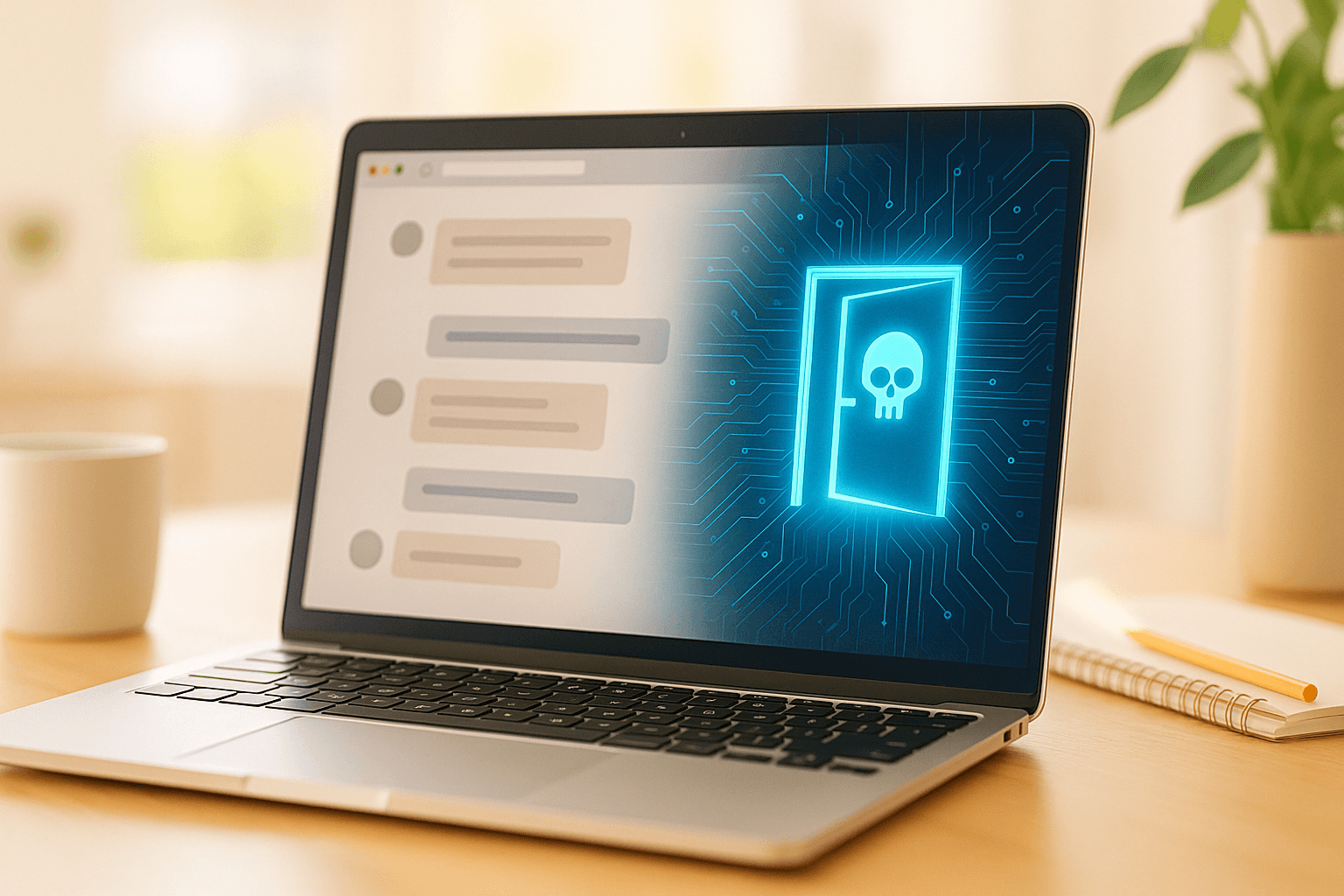
Executive Summary
Threat actors are now exploiting ChatGPT to deliver Remote Access Trojans (RATs), leveraging legitimate domains from OpenAI and Google. This new vector of attack poses significant risks to organizations, potentially leading to data breaches and financial losses. Immediate action is required to reinforce security measures and enhance incident detection capabilities.
Introduction: Understanding the Threat
In the ever-evolving landscape of cybersecurity threats, attackers have found a novel method to exploit ChatGPT, a widely used AI platform, as a vector for delivering Remote Access Trojans (RATs). This tactic involves utilizing legitimate domains from OpenAI and Google, thereby bypassing traditional security measures. For organizations, this introduces a new layer of complexity in safeguarding their digital environments. Understanding this threat is critical for developing robust defense strategies.
The abuse of trusted platforms for malicious purposes is not new. However, the sophistication of using AI tools like ChatGPT marks a significant escalation in threat actor capabilities. By embedding RATs within seemingly innocuous interactions, attackers can gain unauthorized access to sensitive systems, leading to potential data exfiltration and operational disruptions.
The Threat Landscape: Current State of Affairs
The cybersecurity landscape is increasingly characterized by the innovative use of AI for both defensive and offensive purposes. According to recent industry reports, over 60% of cyber incidents now involve some form of AI application, whether in attack methodologies or defense mechanisms. The integration of AI into cyberattacks, especially through platforms like ChatGPT, reflects a broader trend towards more sophisticated and harder-to-detect threats.
Recent incidents highlight a growing pattern where legitimate services are co-opted for malicious intent. For instance, similar tactics have been seen in the abuse of cloud services to host malware, exploiting the inherent trust organizations place in these platforms. As these threats evolve, cybersecurity strategies must adapt to address both the technological and psychological aspects of such attacks.
Technical Deep Dive: How the Attack Works
The attack leverages legitimate interactions with ChatGPT to deliver RAT payloads. Threat actors craft malicious custom GPTs that appear benign but are designed to covertly execute RATs once accessed. This involves using sophisticated social engineering techniques to lure users into engaging with these custom GPTs. Once the interaction occurs, the RAT is deployed, establishing a backdoor into the victim's system.
The technical indicators of compromise (IOCs) in such attacks include unusual traffic patterns to OpenAI domains, unexpected file executions, and anomalous system behavior. Attackers may also utilize obfuscation techniques to mask the RAT's presence and avoid detection by conventional security tools.
For security teams, identifying these IOCs is critical. Monitoring network traffic for irregularities and employing behavioral analysis tools can aid in early detection. Additionally, security professionals should be aware of any CVEs that may be exploited in these attacks, though the use of legitimate domains often circumvents traditional vulnerability exploitation.
Impact Assessment: Who Is Affected and How
The industries most at risk from these attacks include finance, healthcare, and technology, where sensitive data and critical infrastructure are prime targets. The financial implications of a successful RAT deployment can be severe, potentially resulting in data breaches, regulatory fines, and reputational damage.
Operationally, organizations may face disruptions to business processes, as RATs can facilitate further attacks, such as ransomware or data theft. From a compliance perspective, failing to protect against such threats could result in significant penalties under regulations like GDPR or CCPA.
Real-World Case Studies
In a notable case, a European financial institution fell victim to a RAT attack via a malicious ChatGPT interaction. The breach led to unauthorized access to customer data, prompting an investigation and significant financial penalties. The incident underscored the importance of continuous monitoring and employee awareness.
Another case involved a healthcare provider where attackers used similar tactics to access patient records. The breach highlighted vulnerabilities in the provider's security posture, leading to a comprehensive overhaul of their security protocols and the adoption of AI-driven threat detection systems.
Mitigation Strategies: Protecting Your Organization
Organizations must adopt a multi-layered security strategy to protect against these sophisticated threats. Immediate actions include updating security policies to incorporate AI interaction monitoring and strengthening access controls for sensitive systems. Implementing advanced threat detection tools that leverage machine learning can enhance an organization’s ability to identify anomalous activities.
Short-term measures should focus on employee education, emphasizing the risks associated with interacting with AI platforms and the importance of recognizing social engineering tactics. Long-term, organizations should invest in AI-driven security solutions capable of adapting to emerging threats and incorporating threat intelligence feeds to stay ahead of attackers.
Specific tools such as endpoint detection and response (EDR) systems, coupled with network traffic analysis solutions, can provide comprehensive visibility into potential threats. Configurations should be regularly reviewed to ensure they align with the latest threat intelligence and best practices.
Detection and Response
Detecting these attacks early is crucial. Security teams should establish robust monitoring systems to identify signs of compromise, such as unusual network traffic or unexpected system processes. Leveraging AI-enhanced detection tools can provide the necessary edge in identifying subtle indicators of RAT deployment.
Incident response procedures should be clearly defined and regularly tested to ensure swift action in the event of an attack. This includes having a forensic team ready to analyze breaches and determine the scope and impact of any intrusion.
Expert Insights: Industry Perspective
Industry experts emphasize that the integration of AI into both attack and defense strategies will continue to evolve. As attackers become more sophisticated, leveraging AI tools to simulate human-like interactions, security teams must enhance their capabilities to detect and mitigate such threats effectively.
Future predictions suggest a rise in AI-driven attacks, necessitating a proactive approach to threat intelligence and a commitment to continuous innovation in cybersecurity solutions. Security teams should prepare for a landscape where AI tools are as much a part of the problem as they are the solution.
Conclusion: Key Takeaways
As cyber threats evolve, leveraging AI platforms like ChatGPT for malicious purposes reflects a significant shift in attack methodologies. Organizations must adapt their security strategies to address these emerging challenges. Key takeaways include:
- Monitor AI interactions for signs of malicious activity.
- Enhance employee awareness of AI-related threats.
- Invest in AI-driven threat detection solutions.
- Regularly update incident response plans.
- Stay informed on the latest threat intelligence.
Proactive measures and continuous adaptation are essential to safeguarding against these sophisticated threats.
Discussion
Share Your Thoughts
Loading comments...
Stay Updated
Subscribe to our newsletter for the latest cybersecurity insights, threat intelligence, and security best practices.