

Explosive Rise in Device Code Phishing and Vishing: A 2026 Outlook
Navigating the Surge in Sophisticated Social Engineering Attacks
Executive Summary
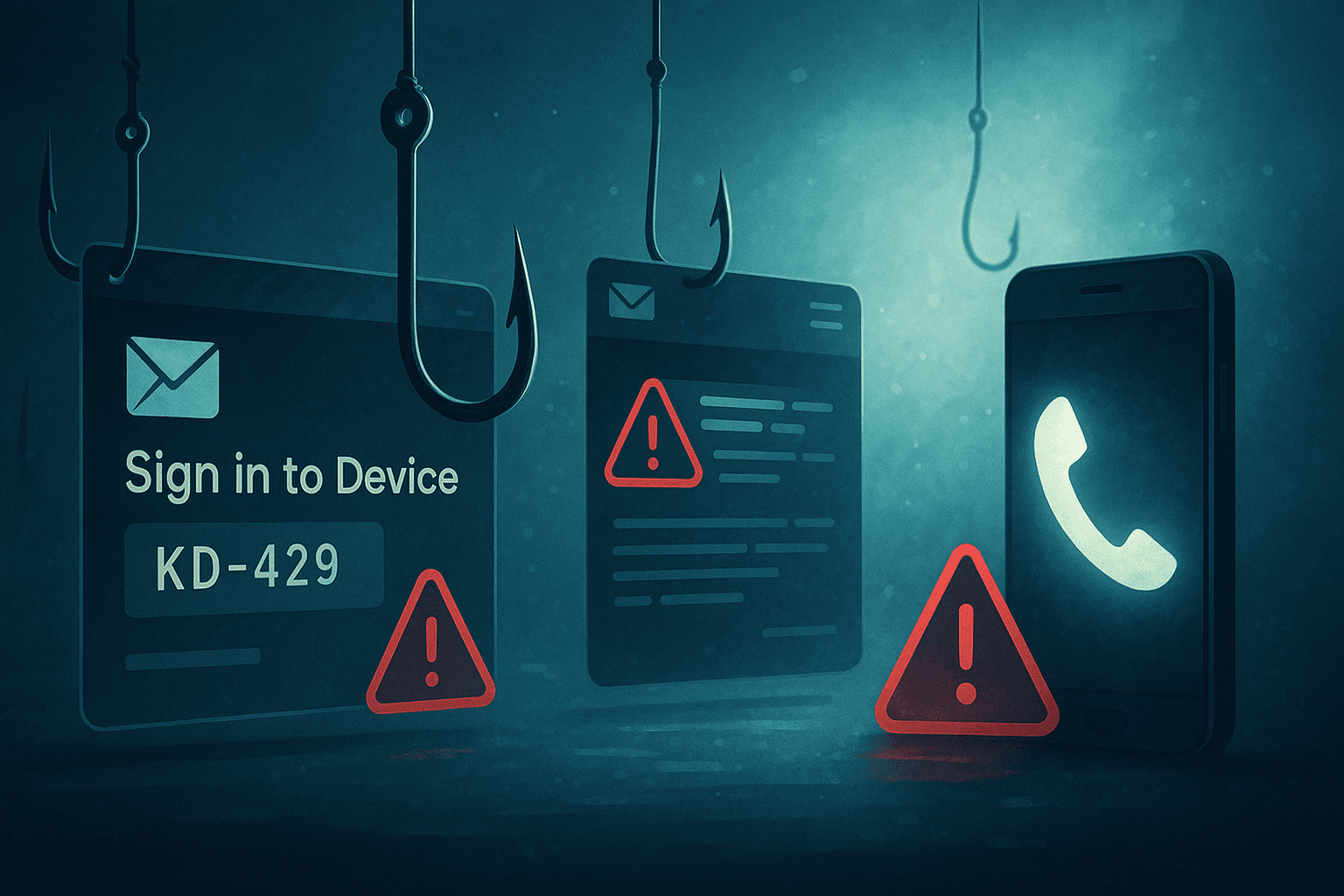
Device code phishing incidents have skyrocketed by 1,500% in 2026, coupled with a doubling of vishing attacks. These advanced social engineering methods allow attackers to circumvent traditional security measures, leaving minimal evidence. Organizations need to bolster security frameworks and employee training to tackle these evolving threats.
Introduction: Understanding the Threat
The digital landscape is increasingly fraught with sophisticated social engineering attacks, with device code phishing and vishing at the forefront. These methods exploit human psychology to breach organizations, bypassing many security controls. Understanding these threats is crucial for today's cybersecurity landscape, where traditional defenses are no longer sufficient.
Historically, phishing has been a prevalent threat, evolving from simple email scams to complex schemes targeting specific individuals and organizations. Vishing, or voice phishing, has similarly matured, leveraging advanced technologies to deceive victims into revealing confidential information. The current surge highlights the need for renewed focus and innovation in security strategies.
The Threat Landscape: Current State of Affairs
The cybersecurity domain is witnessing a dramatic rise in social engineering attacks, notably device code phishing and vishing. According to recent industry reports, device code phishing has increased by 1,500% in 2026, indicating its growing prevalence and effectiveness. Concurrently, vishing has doubled, underscoring the adaptability and resourcefulness of cybercriminals.
This surge fits within a broader trend of attackers seeking methods that evade traditional security controls. As organizations implement stronger defenses, threat actors pivot toward exploiting the human element, which remains a vulnerable link in the security chain. Recent incidents highlight attackers' increasing sophistication in crafting believable scenarios to dupe even the most cautious individuals.
Moreover, the rapid adoption of remote work and digital transformation initiatives has expanded the attack surface, providing more opportunities for threat actors to exploit. As such, these social engineering tactics are not only becoming more frequent but also more targeted and damaging.
Technical Deep Dive: How the Attack Works
Device code phishing leverages the OAuth 2.0 protocol, exploiting its device code flow mechanism. In a typical attack, users are tricked into entering a device code on a malicious site, granting attackers access to their accounts. This method bypasses multi-factor authentication (MFA), a security measure many organizations rely on.
Vishing attacks often involve the use of voice-over-IP (VoIP) technology to spoof legitimate phone numbers, enhancing the credibility of the attack. Attackers impersonate trusted entities, persuading victims to disclose sensitive information, such as passwords or account details. The use of AI-driven voice synthesis further complicates detection, as attackers can mimic familiar voices.
Technical indicators of compromise (IOCs) include unusual login attempts from unauthorized devices or locations, unexpected account activity, and anomalies in user behavior. Security teams should monitor for these signs to detect potential breaches early.
It's crucial for organizations to understand these methodologies and adapt their security postures accordingly. Implementing robust monitoring and anomaly detection systems can help identify and mitigate these threats before they cause significant harm.
Impact Assessment: Who Is Affected and How
The impact of these attacks is profound, affecting various industries, particularly those with high-value data or critical infrastructure. Financial services, healthcare, and government sectors are prime targets due to the sensitive nature of their data and operations.
Financial consequences can be severe, with organizations facing direct losses from fraudulent transactions, as well as indirect costs such as legal fees, regulatory fines, and reputational damage. Operational disruptions are also a concern, as breaches can lead to significant downtime and recovery efforts.
Data breaches resulting from these attacks pose a significant risk, often leading to the exposure of personal and proprietary information. Regulatory and compliance implications are substantial, as organizations may face penalties for failing to protect customer data adequately under regulations such as GDPR and HIPAA.
Real-World Case Studies
In a notable case, a major financial institution fell victim to a device code phishing attack, resulting in a breach of customer accounts. The attackers exploited the OAuth 2.0 device code flow, bypassing the bank's MFA and accessing sensitive financial data. The breach prompted a comprehensive review of the institution's security policies and practices, leading to significant improvements in their authentication processes.
Another instance involved a healthcare provider targeted by a vishing attack. The attackers posed as IT support personnel, convincing staff to reveal their login credentials. The breach compromised patient records, triggering a costly and complex remediation process. The organization has since implemented rigorous employee training and enhanced verification procedures to prevent future incidents.
Mitigation Strategies: Protecting Your Organization
Organizations must adopt a multi-layered approach to mitigate the risks posed by device code phishing and vishing. Immediate actions include conducting comprehensive security awareness training to educate employees about these threats and how to identify them.
Short-term measures involve strengthening authentication mechanisms, such as implementing biometric verification and adaptive MFA. Organizations should also ensure their security policies are up-to-date and reflect the latest threat intelligence.
For long-term strategic improvements, investing in advanced threat detection and response solutions is crucial. These tools can help identify and respond to suspicious activities promptly, minimizing potential damage. Additionally, regular security audits and penetration testing can uncover vulnerabilities and improve overall resilience.
Specific tools and technologies to consider include behavioral analytics platforms, which can detect anomalies in user behavior, and secure access solutions that limit access based on the principle of least privilege. Configuration recommendations include ensuring all systems are patched and updated regularly to mitigate known vulnerabilities.
Detection and Response
Effective detection methods involve monitoring for signs of compromise, such as unusual login attempts and unexpected account activity. It is also essential to establish clear incident response procedures, enabling quick and efficient action in the event of a breach.
Forensic considerations play a vital role in understanding the attack vector and identifying the root cause. Organizations should maintain detailed logs and records to facilitate thorough investigations and support remediation efforts.
Expert Insights: Industry Perspective
Experts predict that social engineering attacks will continue to evolve, leveraging emerging technologies such as AI and deepfake to enhance their effectiveness. As attackers become more sophisticated, security teams must remain vigilant and proactive in their approaches.
The future threat landscape will likely see an increase in targeted attacks, with threat actors focusing on specific industries and organizations. Security teams should prepare by enhancing their threat intelligence capabilities and adopting a proactive defense posture.
Continuous learning and adaptation are essential, as the cybersecurity landscape is dynamic and ever-changing. Organizations must prioritize ongoing education and training for their security teams to stay ahead of emerging threats.
Conclusion: Key Takeaways
In summary, the rise of device code phishing and vishing underscores the need for robust security measures and heightened awareness. Organizations must adapt to the evolving threat landscape by implementing comprehensive security strategies and fostering a culture of security awareness.
- Device code phishing has increased by 1,500% in 2026, with vishing also doubling.
- These attacks exploit psychological vulnerabilities, bypassing traditional security controls.
- Immediate steps include employee training and strengthening authentication mechanisms.
- Long-term strategies involve investing in advanced threat detection and response solutions.
- Continuous monitoring and regular security audits are essential for identifying vulnerabilities.
- Organizations must remain vigilant and proactive in adapting to emerging threats.
- Collaboration and information sharing are key to staying ahead of cybercriminals.
Discussion
Share Your Thoughts
Loading comments...
Stay Updated
Subscribe to our newsletter for the latest cybersecurity insights, threat intelligence, and security best practices.