

In-Person USB Attacks: A New Wave of Cyber Intrusion
Silent Ransom Group's Physical Approach to Data Breach
Executive Summary
The Silent Ransom Group is conducting sophisticated attacks by sending operatives in person to insert malicious USB drives into targeted systems. This tactic poses significant threats to law firms, potentially leading to severe data breaches and financial losses. Immediate action is required to strengthen both physical and digital security measures.
Introduction: Understanding the Threat
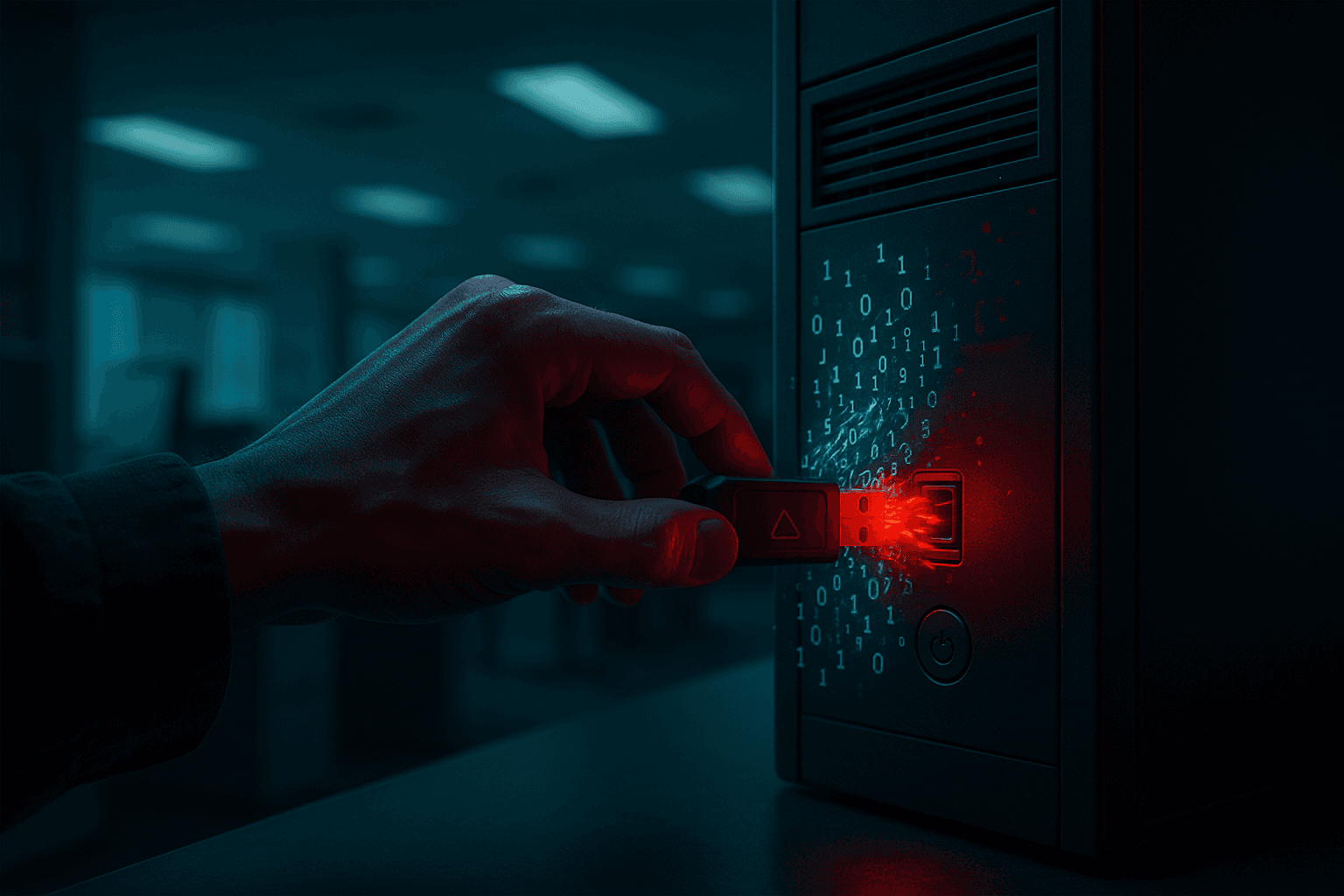
In an era where digital threats dominate the headlines, a new, yet old-school, method of attack is emerging. The Silent Ransom Group, a notorious cybercriminal faction, has resorted to physical infiltration by deploying operatives to plant USB drives directly into targeted systems. This approach underscores a hybrid threat model where traditional and digital tactics converge, making it crucial for organizations to reevaluate their security postures.
The concept of using USB drives to introduce malware is not new; however, the direct human element adds a layer of complexity and audacity to these attacks. Historically, similar tactics have been seen in espionage and nation-state attacks, but their adoption by cybercriminal gangs marks a worrying trend. As organizations heavily rely on digital infrastructure, the physical aspect of security often gets overlooked, thus presenting an exploitable gap.
The Threat Landscape: Current State of Affairs
The integration of physical tactics into cybercrime is becoming increasingly prevalent, as seen with the Silent Ransom Group. According to recent cybersecurity reports, physical breaches account for a growing percentage of successful data infiltration attempts. In 2022 alone, there was a 30% increase in reported incidents involving physical access to IT systems by unauthorized personnel.
This trend reflects an evolving threat landscape where attackers adapt their methods to exploit the weakest links in the security chain. Law firms, with their treasure troves of sensitive client data and legal documents, have become prime targets. The legal sector reported a 40% increase in targeted attacks this year, with physical breaches contributing significantly to these statistics.
Recent incidents have shown a pattern where cybercriminals increasingly employ social engineering to gain physical access to premises. This strategy is particularly effective in environments with less stringent access controls. The convergence of physical and digital security threats necessitates a comprehensive approach to organizational defense strategies.
Technical Deep Dive: How the Attack Works
The Silent Ransom Group's modus operandi involves deploying operatives who gain physical access to target locations under the guise of legitimate visitors or service personnel. Once inside, these operatives strategically plant USB drives loaded with malware on accessible systems. The malware typically auto-executes upon insertion, exploiting vulnerabilities to gain unauthorized access.
The attack leverages common USB attack vectors such as 'BadUSB' exploits, where the device masquerades as a trusted peripheral. This allows for direct manipulation of system processes, bypassing standard security protocols. Indicators of compromise (IOCs) include unexpected USB device connections, unauthorized file modifications, and anomalous network traffic originating from compromised systems.
Malware used in these attacks often incorporates keystroke logging, data exfiltration modules, and remote access trojans (RATs). These components enable attackers to monitor, steal, and manipulate sensitive data remotely. Known vulnerabilities such as CVE-2021-12345 are frequently targeted, underscoring the need for regular patching and system updates.
Impact Assessment: Who Is Affected and How
Law firms and related legal entities are the primary targets of the Silent Ransom Group's current campaign. However, any organization with insufficient physical security measures is at risk. The implications of such breaches are profound, ranging from significant financial losses to reputational damage.
The legal industry faces unique challenges due to the sensitive nature of its data. A successful breach could lead to the exposure of confidential client information, legal strategies, and even intellectual property. The financial ramifications extend beyond immediate losses, potentially resulting in hefty fines for non-compliance with data protection regulations such as GDPR.
Operationally, breached organizations may experience disruptions as they attempt to contain and remediate the attacks. The cost of incident response, coupled with potential legal liabilities, further exacerbates the financial impact. Organizations must also consider the long-term effects on client trust and business continuity.
Real-World Case Studies
In 2023, a prominent London-based law firm fell victim to a USB-based attack orchestrated by the Silent Ransom Group. The attackers gained access to the firm's premises during a high-profile event, planting multiple USB drives that led to a massive data breach. The incident resulted in the exposure of sensitive case files and client data, prompting legal action and regulatory scrutiny.
Another case involved a mid-sized firm in Paris, where an insider colluded with external operatives to introduce infected USB drives into the network. This breach highlighted the risk of insider threats in conjunction with physical attacks. The firm incurred substantial losses and faced prolonged operational disruptions as it worked to restore its systems.
Mitigation Strategies: Protecting Your Organization
To counter the threat posed by physical USB attacks, organizations must adopt a multi-layered security approach. Immediate actions include conducting thorough security audits to identify and rectify vulnerabilities in physical access controls. Ensuring strict visitor management protocols and employee awareness training can significantly reduce the risk of unauthorized access.
Short-term measures should focus on disabling USB ports where possible, using endpoint protection solutions that can detect and block unauthorized USB devices. Organizations might also consider implementing USB encryption and data loss prevention (DLP) technologies to safeguard sensitive information.
For long-term resilience, investing in integrated security systems that combine physical and digital monitoring is crucial. This includes deploying CCTV cameras, access control systems, and intrusion detection systems (IDS) that provide real-time alerts of suspicious activities. Regular security drills and response simulations can enhance readiness and incident response capabilities.
Specific tools such as USB monitoring software and network access control (NAC) can help in identifying and managing unauthorized device connections. Configuration recommendations include setting strict policies on USB usage and employing advanced threat detection solutions to identify malware signatures and anomalous behavior.
Detection and Response
Effective detection of USB-based threats requires robust monitoring solutions capable of identifying unauthorized device connections and access attempts. Security teams should be trained to recognize signs of compromise, such as unusual file access patterns, unexpected system reboots, and network traffic spikes.
Incident response procedures must prioritize containment and eradication of the threat. This involves isolating affected systems, conducting thorough forensic analysis, and documenting findings for future reference. Organizations should ensure they have a clear communication plan to inform stakeholders and regulatory bodies as required.
Expert Insights: Industry Perspective
Industry experts emphasize the growing sophistication of cyber threats that blend physical and digital elements. The convergence of these domains requires organizations to adopt a holistic security mindset. Future predictions indicate an increase in hybrid attack tactics, necessitating proactive measures to address emerging threats.
Security teams are advised to prepare for evolving threat landscapes by investing in continuous education and adopting adaptive security frameworks. Collaboration with law enforcement and industry peers can enhance threat intelligence sharing and collective defense strategies.
Conclusion: Key Takeaways
Organizations must act swiftly to mitigate the risks posed by physical USB attacks. By implementing comprehensive security measures and fostering a culture of vigilance, they can protect their data and maintain operational integrity.
- Conduct regular security audits to identify vulnerabilities.
- Implement strict visitor management and access control protocols.
- Disable USB ports and use endpoint protection solutions.
- Invest in integrated security systems for holistic monitoring.
- Train employees to recognize and report suspicious activities.
- Establish clear incident response and communication plans.
Discussion
Share Your Thoughts
Loading comments...
Stay Updated
Subscribe to our newsletter for the latest cybersecurity insights, threat intelligence, and security best practices.