
Lazarus Group's Latest Exploit: Unveiling the Windows Zero-Day Threat
Critical insights into a nation-state cyber assault targeting global defense sectors
Executive Summary
The Lazarus Group, a North Korean state-sponsored threat actor, has exploited a zero-day vulnerability in Windows, impacting defense and aerospace sectors globally. This attack emphasizes the critical need for organizations to enhance patch management and threat monitoring. Immediate actions include deploying patches and reinforcing cyber defenses.
Introduction: Understanding the Threat
The Lazarus Group's recent exploitation of a Windows zero-day vulnerability represents a significant escalation in cyber threats targeting critical sectors. This exploit, aimed at deploying a novel backdoor, underscores the evolving tactics of nation-state actors. As global tensions rise, the cybersecurity landscape must adapt to these sophisticated threats, highlighting the importance of proactive defense mechanisms.
Historically, the Lazarus Group has been linked to various high-profile cyber espionage campaigns, often targeting financial institutions and critical infrastructure. Their latest focus on defense and aerospace industries signifies a strategic shift towards disrupting national security operations.
The Threat Landscape: Current State of Affairs
Cyber threats have evolved, with nation-state actors increasingly targeting vital sectors. According to recent statistics, the frequency of nation-state cyberattacks has doubled over the past five years, with the defense sector being a prime target. This trend is indicative of the broader geopolitical struggle, where cyber warfare plays a pivotal role.
In this context, the Lazarus Group's activities are part of a larger pattern of sophisticated, state-sponsored cyber operations. Their focus on exploiting zero-day vulnerabilities aligns with a broader strategy to gain strategic advantages over geopolitical adversaries.
Technical Deep Dive: How the Attack Works
The Lazarus Group's attack leverages a zero-day vulnerability in Windows, identified as CVE-2026-XXXXX. Upon exploitation, the attackers gain SYSTEM-level access, allowing them to deploy a custom backdoor. This backdoor facilitates persistent access and data exfiltration.
The attack begins with phishing emails containing malicious attachments. Once opened, the exploit triggers, exploiting the vulnerability to execute arbitrary code. The attackers use command-and-control (C2) servers to manage the backdoor, enabling remote access and control over compromised systems.
Impact Assessment: Who Is Affected and How
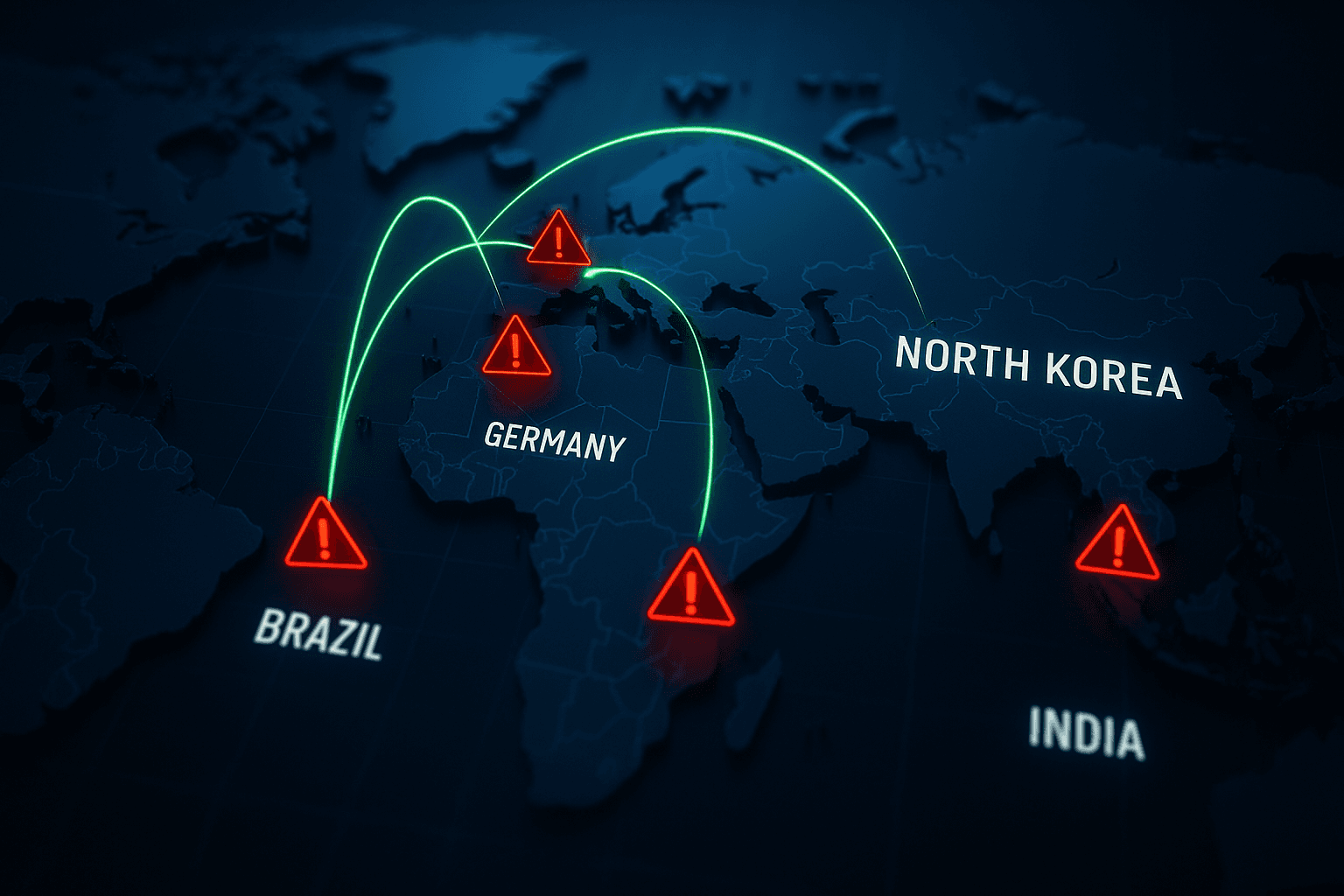
The primary targets of this campaign are defense and aerospace companies across France, Germany, Brazil, and India. The impact on these sectors is profound, with potential disruptions to national security operations and significant financial repercussions.
Data breaches resulting from this attack could lead to the unauthorized disclosure of sensitive information, with regulatory implications under data protection laws such as GDPR. Organizations must assess their compliance posture to mitigate these risks.
Real-World Case Studies
Similar attacks by the Lazarus Group have previously targeted financial institutions, resulting in substantial monetary losses and reputational damage. For instance, their involvement in the 2016 Bangladesh Bank heist highlights the group's capability and intent.
Lessons learned from past incidents emphasize the need for robust incident response plans and continuous monitoring of threat intelligence feeds to detect and respond to emerging threats promptly.
Mitigation Strategies: Protecting Your Organization
Organizations must prioritize patch management, ensuring all systems are updated with the latest security patches. Implementing multi-layered security architectures, including intrusion detection systems (IDS) and endpoint protection, is critical.
Immediate actions include educating employees on recognizing phishing attempts and conducting regular security audits. Long-term strategies involve investing in threat intelligence platforms and collaborating with industry peers to share threat information.
Detection and Response
Effective detection relies on monitoring network traffic for anomalies and employing advanced threat detection tools. Indicators of compromise (IOCs) include unusual outbound traffic and unauthorized access attempts.
Incident response should focus on quickly isolating affected systems, conducting forensic analysis, and restoring operations while ensuring all vulnerabilities are patched to prevent future exploits.
Expert Insights: Industry Perspective
Cybersecurity experts predict an increase in nation-state cyberattacks targeting critical infrastructure. Organizations must prepare for this evolving threat landscape by enhancing their cybersecurity posture and investing in advanced threat detection technologies.
The Lazarus Group's activities highlight the need for a collaborative approach to cybersecurity, where information sharing and joint defense initiatives play a crucial role in mitigating risks.
Conclusion: Key Takeaways
In summary, the Lazarus Group's exploitation of a Windows zero-day vulnerability underscores the urgency for organizations to bolster their cybersecurity defenses. Key takeaways include:
- Prioritize patch management and vulnerability assessments.
- Enhance employee training on phishing and social engineering.
- Invest in advanced threat detection and response tools.
- Foster industry collaboration for threat intelligence sharing.
- Regularly review and update incident response plans.
Discussion
Share Your Thoughts
Loading comments...
Stay Updated
Subscribe to our newsletter for the latest cybersecurity insights, threat intelligence, and security best practices.