

Ransomware's Rise in Europe: A New Cyber Battleground
Understanding the Growing Threat to EU Organizations
Executive Summary
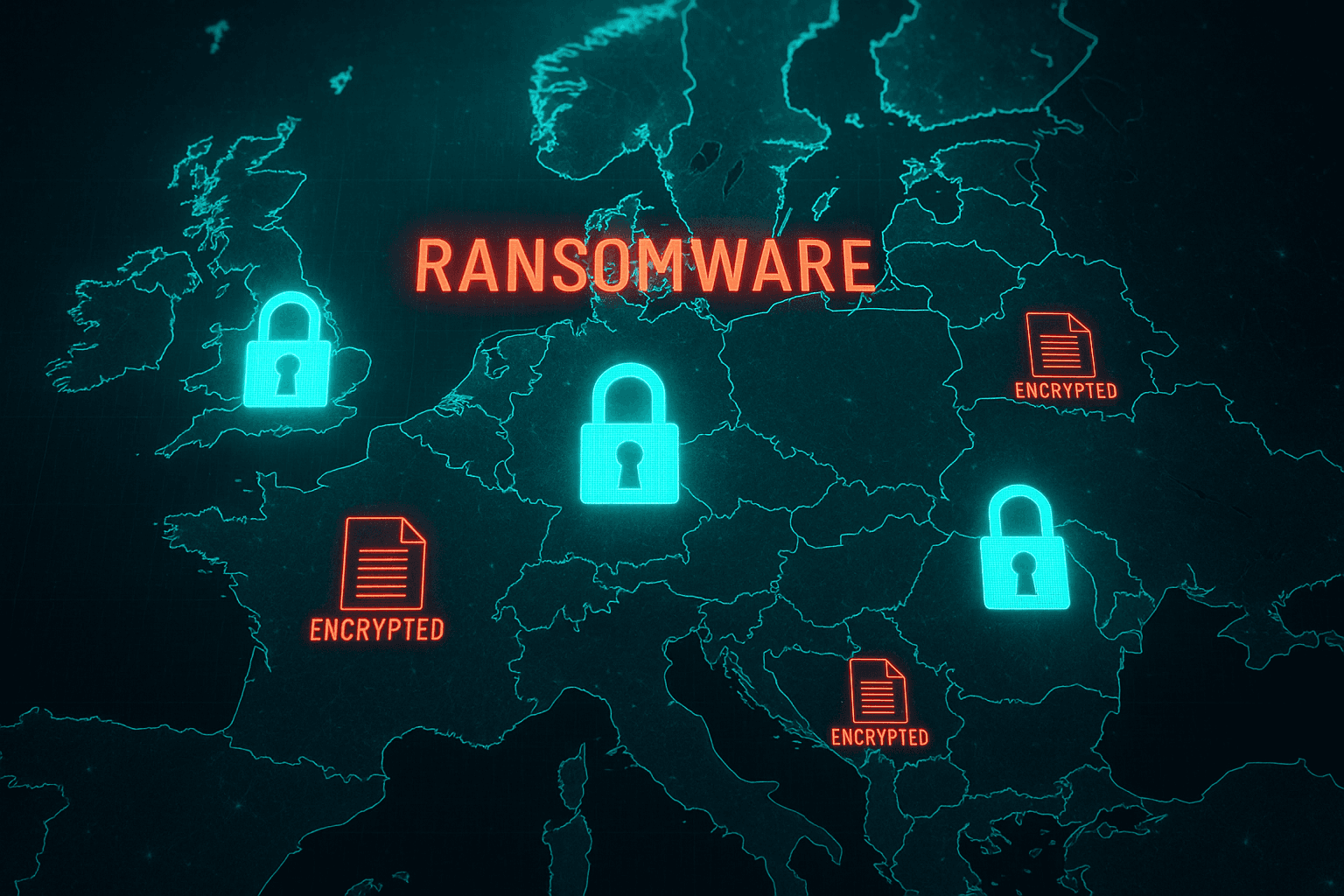
Ransomware is turning its focus to Europe, targeting organizations and their suppliers. This shift poses significant threats, requiring immediate action to bolster defenses. European entities must adapt and collaborate to protect against this evolving menace.
Introduction: Understanding the Threat
In recent months, ransomware attacks have surged across Europe, marking a shift in cybercriminal activity towards the region. This trend is alarming for organizations as it signals a new focus on European infrastructures, which were previously less targeted compared to other regions.
The history of ransomware highlights its evolution from simple encryption schemes to sophisticated, multi-stage attacks. Previously, regions like North America bore the brunt of such attacks, but with increased defenses there, Europe has become a prime target.
The Threat Landscape: Current State of Affairs
According to recent statistics, ransomware attacks in Europe have increased by 30% over the past year. This rise is attributed to the lucrative nature of European markets and the interconnectedness of its supply chains. The European Union's diverse economic landscape presents both opportunities and vulnerabilities for attackers.
Recent incidents, such as the attack on a major European energy provider, underscore the potential for widespread disruption. These attacks often exploit gaps in cybersecurity frameworks, emphasizing the need for comprehensive protective measures.
Technical Deep Dive: How the Attack Works
Ransomware attacks typically begin with phishing emails, which serve as the initial attack vector. Once an employee opens a malicious attachment, malware is deployed, encrypting critical files. Attackers then demand a ransom, usually in cryptocurrency, for the decryption key.
Technical indicators of compromise (IOCs) include unusual network activity and the presence of known ransomware signatures. Tools like Cobalt Strike have been used to maintain persistence within compromised networks, complicating detection and response efforts.
Impact Assessment: Who Is Affected and How
Sectors heavily reliant on digital infrastructure, such as finance, healthcare, and manufacturing, are particularly vulnerable. The financial impact can be devastating, with ransom demands often reaching millions of euros. Moreover, operational downtime can result in significant losses, both financially and reputationally.
Data breaches are a common consequence of ransomware attacks, potentially leading to violations of regulations like the General Data Protection Regulation (GDPR), which can incur hefty fines.
Real-World Case Studies
In a notable case, a prominent European automotive company faced a ransomware attack that halted production for days, costing millions. By examining this incident, we learn the importance of robust incident response plans and the need for regular cybersecurity audits.
Mitigation Strategies: Protecting Your Organization
Organizations should implement a multi-layered security approach, starting with employee training to recognize phishing attempts. Deploying advanced endpoint protection and maintaining regular backups are critical steps in mitigating ransomware threats.
Long-term improvements include investing in threat intelligence services and adopting zero-trust architectures to minimize attack surfaces.
Detection and Response
Effective detection involves monitoring for anomalies in network traffic and utilizing intrusion detection systems (IDS) to identify potential breaches. Having a well-defined incident response plan is crucial for minimizing damage during an attack.
Expert Insights: Industry Perspective
Experts predict that ransomware tactics will continue to evolve, with attackers employing more advanced techniques. Security teams must stay informed about emerging threats and adapt their strategies accordingly.
Conclusion: Key Takeaways
The rise of ransomware in Europe is a pressing concern that requires immediate attention and action from organizations across the region.
- Implement comprehensive cybersecurity training for all employees.
- Adopt a robust incident response plan and regularly test its effectiveness.
- Invest in advanced security tools and technologies to detect and prevent attacks.
- Maintain regular backups and ensure they are securely stored offline.
- Collaborate with industry peers to share threat intelligence and best practices.
Discussion
Share Your Thoughts
Loading comments...
Stay Updated
Subscribe to our newsletter for the latest cybersecurity insights, threat intelligence, and security best practices.