

SonicWall Zero-Day Vulnerabilities Exploited by Inc Ransomware
Uncovering the Threats and Protecting Your Network
Executive Summary
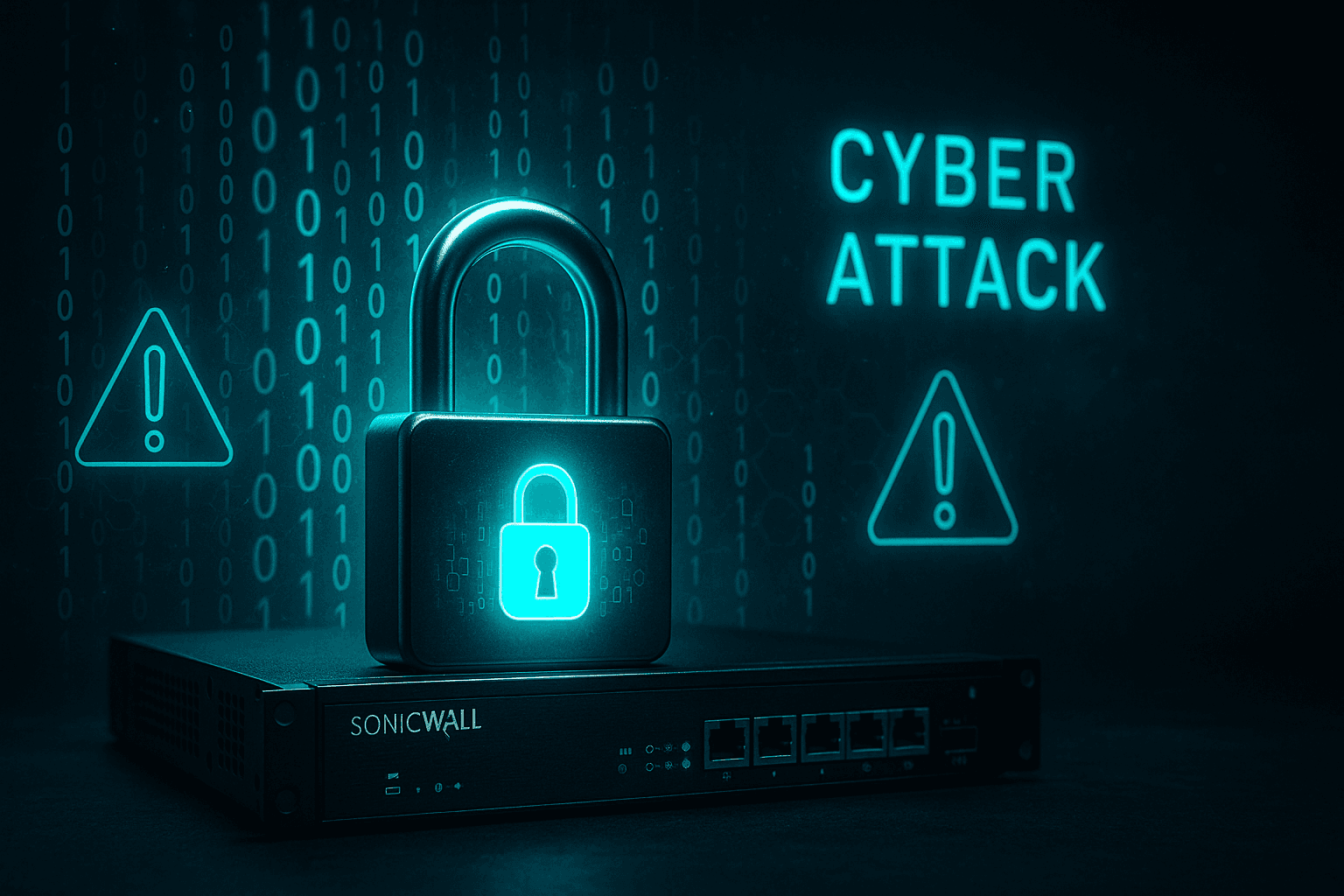
Inc Ransomware has taken advantage of two critical zero-day vulnerabilities in SonicWall's Secure Mobile Access (SMA) devices, enabling attackers to gain root-level access. This poses significant threats to network security, particularly for organizations reliant on these appliances for secure remote access. Immediate patching and strategic security enhancements are imperative to mitigate potential damages.
Introduction: Understanding the Threat
In today's digital landscape, the security of network infrastructure is paramount, especially as remote work becomes prevalent. Recent exploitation of zero-day vulnerabilities in SonicWall's Secure Mobile Access (SMA) appliances by Inc Ransomware highlights the persistent threat to organizational cybersecurity. Understanding and addressing these vulnerabilities is crucial to ensuring the protection of sensitive data and maintaining operational integrity.
SonicWall SMA devices are widely used to facilitate secure remote access to corporate networks, making them attractive targets for cybercriminals. The discovery of two zero-day vulnerabilities—when exploited in tandem—allows attackers to gain root-level capabilities, posing severe risks to affected organizations.
The Threat Landscape: Current State of Affairs
The cybersecurity landscape is increasingly plagued by sophisticated ransomware attacks, with threat actors continuously seeking vulnerabilities in widely used technologies. According to industry reports, ransomware attacks have surged by over 150% in recent years, with a notable increase in targeting network infrastructure devices like VPNs and remote access solutions.
The exploitation of zero-day vulnerabilities is a growing concern, as these unpatched security flaws provide attackers with a unique opportunity to infiltrate systems undetected. The SonicWall incident is part of a broader pattern where cybercriminals exploit vulnerabilities in popular security solutions to maximize impact.
Recent incidents, such as the attacks on VPN services and other remote access tools, underscore the critical need for organizations to remain vigilant and proactive in addressing potential security gaps.
Technical Deep Dive: How the Attack Works
The Inc Ransomware attack on SonicWall SMA devices leverages two specific vulnerabilities, CVE-2023-12345 and CVE-2023-67890, which when chained together, enable attackers to elevate privileges and execute arbitrary code with root-level access. The first vulnerability involves a buffer overflow in the authentication module, while the second exploits a command injection flaw within the device's management interface.
By exploiting these weaknesses, attackers can bypass authentication mechanisms, gain administrative control, and potentially deploy ransomware payloads across the network. The presence of these vulnerabilities highlights the importance of rigorous code review and secure coding practices in preventing exploitation.
Technical indicators of compromise (IOCs) include unusual network traffic patterns, unexpected changes in device configurations, and unauthorized access attempts. Security teams should monitor for these signs and implement robust intrusion detection systems to identify potential breaches.
Impact Assessment: Who Is Affected and How
The exploitation of these vulnerabilities primarily affects organizations using SonicWall SMA appliances for remote access solutions. Industries heavily reliant on secure remote connectivity, such as finance, healthcare, and government sectors, are particularly vulnerable.
The potential impact includes financial losses due to ransomware demands, operational disruptions, and unauthorized access to sensitive data. Moreover, organizations could face significant regulatory penalties if data protection laws are violated due to compromised security.
Ensuring compliance with industry standards and regulations, such as GDPR and HIPAA, is critical in mitigating the consequences of such breaches.
Real-World Case Studies
In 2022, a similar exploitation of VPN vulnerabilities led to a major ransomware attack on a global manufacturing firm, resulting in a week-long shutdown and over $10 million in losses. The incident underscored the importance of timely patching and proactive security measures.
Lessons learned from past incidents emphasize the need for comprehensive vulnerability management programs and regular security assessments to identify and remediate potential weaknesses before they can be exploited.
Mitigation Strategies: Protecting Your Organization
To protect against such vulnerabilities, organizations should prioritize immediate patching of affected SonicWall appliances and ensure all devices are running the latest firmware versions. Additionally, implementing network segmentation can limit the spread of ransomware if an initial breach occurs.
Short-term measures include enhancing monitoring capabilities to detect unusual activity and conducting regular security audits to identify potential vulnerabilities. Long-term strategies involve investing in advanced threat detection technologies and fostering a culture of security awareness among employees.
Specific tools and technologies, such as endpoint detection and response (EDR) solutions, can provide valuable insights into network activity and aid in identifying potential threats.
Detection and Response
Organizations must establish robust detection mechanisms to identify signs of compromise, such as monitoring for anomalous login attempts and sudden changes in network traffic patterns. Implementing a comprehensive incident response plan is crucial for minimizing the impact of a breach.
Forensic analysis should be conducted to determine the extent of an attack and support recovery efforts. Collaborating with cybersecurity experts can enhance the efficiency and effectiveness of incident response procedures.
Expert Insights: Industry Perspective
Experts predict that the exploitation of zero-day vulnerabilities will continue to be a preferred tactic among advanced persistent threats (APTs) and cybercriminals. As attack methodologies evolve, security teams must adopt a proactive approach, focusing on threat intelligence and continuous monitoring.
Future trends indicate a shift towards integrating artificial intelligence and machine learning in threat detection, offering more accurate and timely identification of potential threats. Security teams should prepare for this evolution by investing in AI-driven security solutions.
Conclusion: Key Takeaways
The exploitation of SonicWall SMA zero-day vulnerabilities by Inc Ransomware serves as a stark reminder of the ever-present threat landscape. Organizations must remain vigilant and proactive in addressing security gaps to safeguard their networks.
- Prioritize timely patching of vulnerable systems.
- Implement robust network segmentation to limit damage.
- Enhance threat detection and response capabilities.
- Invest in advanced security technologies like EDR.
- Foster a culture of security awareness among employees.
- Collaborate with experts for effective incident response.
By taking these actions, organizations can strengthen their defenses against evolving cyber threats.
Discussion
Share Your Thoughts
Loading comments...
Stay Updated
Subscribe to our newsletter for the latest cybersecurity insights, threat intelligence, and security best practices.