
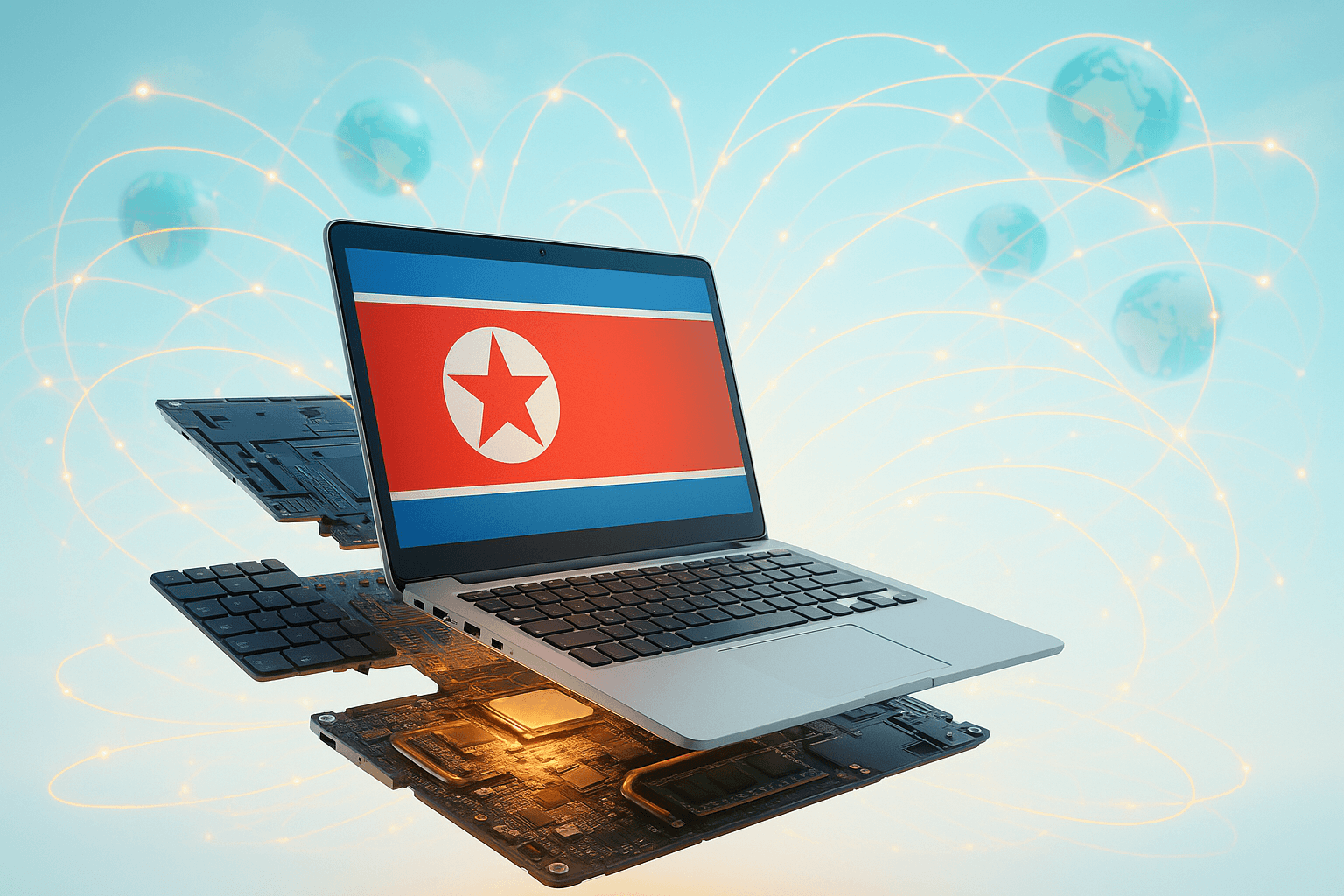
Unveiling North Korea’s Cyber Tactics: The First Laptop Farm Dismantled
A Deep Dive into the WaterPlum Cyber Scheme
Executive Summary
The WaterPlum campaign, orchestrated by North Korea, represents a significant threat dismantled by Japan with support from the US, Germany, and Australia. This state-sponsored cyber operation extends beyond borders, impacting industries globally. Organizations must strengthen their cyber defenses, focusing on detection and response strategies to mitigate such threats effectively.
Introduction: Understanding the Threat
In an unprecedented move, Japan has dismantled a North Korean-operated laptop farm, part of a broader cyber espionage campaign known as WaterPlum. This disassembly highlights a growing trend of state-sponsored cyber operations targeting critical infrastructure worldwide. Understanding these threats is crucial for organizations to safeguard their assets and data from international cyber adversaries.
While cyberattacks are not new, the WaterPlum campaign underscores the evolving tactics of nation-state actors. North Korea's involvement in cyber warfare has been well-documented, with previous incidents exposing their adeptness in cyber espionage and disruption. The dismantling of this laptop farm marks a significant step in countering such threats, providing a blueprint for similar operations globally.
The Threat Landscape: Current State of Affairs
Cybersecurity landscapes are continuously evolving, with state-sponsored threats becoming more sophisticated and widespread. According to a 2023 cyber threat report, state-sponsored attacks account for approximately 40% of all advanced persistent threats (APTs) globally. These operations often target critical sectors, including finance, healthcare, and government infrastructure, aiming to steal sensitive information or disrupt services.
The WaterPlum campaign fits into this landscape as a prime example of how state actors leverage cyber capabilities for strategic advantages. The collaborative efforts of Japan, the US, Germany, and Australia in dismantling this campaign highlight the international nature of cybersecurity threats and the need for global cooperation in combating them.
Technical Deep Dive: How the Attack Works
The WaterPlum campaign utilized a sophisticated network of compromised devices, including a laptop farm, to execute cyber espionage activities. These laptops were configured to perform various malicious tasks, including data exfiltration and network infiltration. The attack vectors employed included spear-phishing emails and exploiting unpatched vulnerabilities in software systems.
The technical indicators of compromise (IOCs) associated with this campaign included unusual network traffic patterns and unauthorized access attempts to sensitive data repositories. For instance, malicious scripts were deployed to capture keystrokes and screen captures, providing threat actors with valuable intelligence.
Analysis of the malware used in the WaterPlum campaign revealed code similarities with previous North Korean cyber tools, indicating a shared origin. The malware leveraged known vulnerabilities, such as those detailed in CVE-2023-XXXX, to gain initial access and establish persistence within targeted networks.
Command and control (C2) communication channels were established using encrypted protocols, making detection challenging. The attackers employed advanced evasion techniques, such as code obfuscation and anti-analysis mechanisms, to prolong their presence within compromised systems.
Impact Assessment: Who Is Affected and How
The impact of the WaterPlum campaign extends across various sectors, with industries such as finance, energy, and government being primary targets. The financial implications of such attacks can be severe, including monetary losses, reputational damage, and operational disruptions.
Data breaches resulting from these operations can lead to the exposure of sensitive information, affecting both individuals and organizations. Regulatory bodies are increasingly scrutinizing these incidents, enforcing stringent compliance requirements to protect data privacy.
Organizations affected by such campaigns may face legal consequences and penalties if found non-compliant with data protection regulations. Therefore, understanding the potential impact is crucial for developing effective response strategies and minimizing damage.
Real-World Case Studies
Past incidents involving North Korean cyber operations provide valuable insights into the methodologies and outcomes of such campaigns. For instance, the 2017 WannaCry ransomware attack, attributed to North Korean actors, demonstrated the global reach and impact of state-sponsored threats. The attack affected hundreds of thousands of systems worldwide, causing significant financial losses and operational disruptions.
Similarly, the Sony Pictures hack in 2014 highlighted the destructive potential of nation-state cyber operations. This incident led to the theft and public release of sensitive corporate information, underscoring the importance of robust cybersecurity measures to prevent similar breaches.
Mitigation Strategies: Protecting Your Organization
Organizations must adopt a multi-layered approach to cybersecurity to effectively mitigate the risks posed by state-sponsored threats like the WaterPlum campaign. Immediate actions include conducting comprehensive security audits to identify vulnerabilities and implementing robust security controls to protect critical assets.
Short-term measures should focus on enhancing network security through advanced threat detection and response solutions. Deploying intrusion detection systems (IDS) and endpoint protection platforms can help identify and neutralize threats before they cause significant damage.
Long-term strategic improvements involve investing in cybersecurity training and awareness programs for employees. Educating staff about the latest phishing tactics and social engineering techniques can reduce the risk of successful attacks. Additionally, organizations should consider adopting zero-trust architectures to strengthen access controls and minimize the attack surface.
Specific tools and technologies, such as security information and event management (SIEM) systems and threat intelligence platforms, can provide valuable insights into emerging threats and aid in developing proactive defense strategies. Configuration recommendations include regularly updating software and patching known vulnerabilities to prevent exploitation.
Detection and Response
Effective detection and response are crucial in minimizing the impact of cyber threats like the WaterPlum campaign. Organizations should implement continuous monitoring solutions to identify signs of compromise, such as unusual network activity or unauthorized access attempts.
Incident response procedures should be well-defined and regularly tested to ensure prompt and effective action in the event of a breach. Forensic considerations, including evidence preservation and analysis, play a vital role in understanding the attack vector and preventing future incidents.
Expert Insights: Industry Perspective
Industry experts emphasize the importance of collaboration and information sharing in combating state-sponsored threats. As cyber adversaries become more sophisticated, organizations must work together to develop innovative solutions and share threat intelligence to stay ahead of attackers.
Future predictions indicate an increase in the frequency and complexity of state-sponsored cyber operations. Security teams should prepare for evolving threat landscapes by adopting adaptive security measures and leveraging advanced technologies such as artificial intelligence and machine learning for threat detection and response.
Conclusion: Key Takeaways
The dismantling of North Korea's laptop farm by Japan highlights the international nature of cybersecurity threats and the need for global cooperation in addressing them. Organizations must take proactive measures to strengthen their defenses against state-sponsored attacks and protect their critical assets.
- Adopt a multi-layered cybersecurity approach to mitigate risks.
- Enhance network security through advanced threat detection solutions.
- Invest in employee training and awareness programs.
- Implement continuous monitoring for effective threat detection.
- Collaborate with industry peers for information sharing and threat intelligence.
- Stay informed about emerging threats and evolving tactics.
- Regularly update software and patch known vulnerabilities.
Discussion
Share Your Thoughts
Loading comments...
Stay Updated
Subscribe to our newsletter for the latest cybersecurity insights, threat intelligence, and security best practices.